My renewed strong love for romance Japanese anime (Part 1)

As a middle age man, I would had laugh if last year somebody would have told me that I ‘d be totally hooked to romance anime series. But here I am, discovering new series in my 40s one after another, and totally hooked into them!
I guess a few factors help to that: my interest and love for Japan, its culture and its movies and series in general and also, as many of these series happen during high school years, a sweet memory of probably the best times of my life, where responsibilities were not so big as we thought and we were shaping our personalities while having a blast discovering the world, the people and friends around us, and what was love, shyness and fear of rejection.
I wanted to share with you readers the list of what I have been watching in the last few months with my honest opinions, in case might help you to discover any new unwatched awesome series!!! Here they are, in no particular ranking apart from being listed from the most recent watched first and on.

(Also I have tried to be careful with spoilers, but there are some around, so just please be warned ahead)

MY DRESS UP DARLING

Sono Bisuku Dōru wa Koi o Suru in Japanese, which literally translates to something like “The Bisque Doll Falls in Love”, a series with currently 2 seasons adapted from the manga by Shinichi Fukuda.

The main character of the series is teenager Wakana Gojo, a good shy boy who lives and works with his grandfather sharing his passion for the family business of crafting traditional Japanese Hina Dolls.  Though Gojo is very talented in handicraft, he lacks social skills and experiences in the real world, keeping to himself and not interacting much with fellow students. That is until he meets the co-protagonist Marin Kitagawa, a stunning beautiful, lively and straightforward blonde amateurish model girl who loves Cosplaying (and wearing her school uniform mini skirt really really short….) 

Marin immediately digs into Gojo’s abilities and they create a friendship and partnership, with Gojo helping her to craft the customs for her Cosplay ideas, while romantic feelings between them start to be developed and Gojo starts to experience more things together with her, coming out of his shelf.

What to say about this one?! One of my favorites series already and a surprise as I was not planning to watch it until I saw some recommendations online. Marin ‘s character is absolutely lovable, having a perfect balance of mischievous naughtiness, kindness, straightforward communication but at the same time also a golden heart, shyness and insecurities. Her appearances both when just herself or when cosplaying are captivating, and it does really embody the female sweetness and beauty that would make most of us have fallen totally for her in high school.

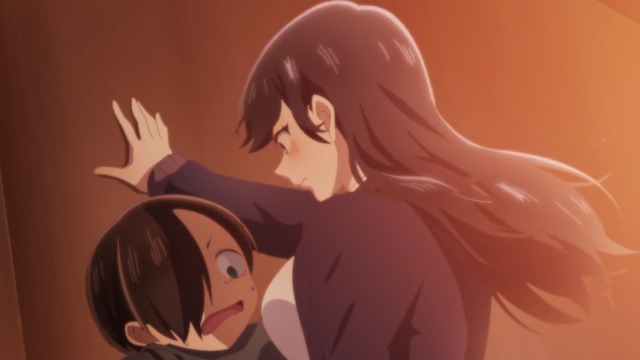
The chemistry between main characters is great, and though the romance advances slowly with baby steps, mainly due to Dojo’s inability to read Marin’s clear feelings towards him, as everybody surrounding them absolutely think they are made one for the other, the journey is precious to follow. I like the touches of naughtiness and sexual innuendos (Marin can be straightforward talking about sexual matters and not shy in wearing very daring outfits, it is implied that Gojo marturbates thinking about her, we have a steamed scene in a love hotel where Marin provokes him an erection and the scene does not end up in their first kiss just by the interruption of a phone call… but those touches are very well measured, showing after all that they are still just young teenagers (age around 15) that need to feel comfortable with how things advance. It is lovely to see how they care for each other in their own way, and how they complement each other to grow into better persons, even having different personalities.

The touches of humor are nice, and I also like that the other characters at high school are not mean and they show respect for Gojo as soon as they start interacting with him. The people who surround them in the Cosplay hobby are also nice, and we can see a crush/love interest towards Gojo by another female character, Juju, but it is not deeply explored in the first 2 seasons.

That is maybe the weak point of the series, as the main storyline with the 2 main characters feels amazing, but sometimes I felt like there was just a very shallow exploration of the interactions and feelings with other external secondary characters. With exception of Gojo’s grandfather, a character that anchors very nicely parts of the story and who seems to understand silently what is happening around and enjoys to see how Gojo is maturing into a man seeing and experiencing the world.

So far a 3rd season of the anime has not been confirmed, and that would be a pity, cause following the story of those two is an incredible experience. The manga series finished already all its volumes (it seems that a bit in a rush as the author was having some health issues), and without making big spoilers, I know that they will go into the right direction and I am quite satisfied when I saw the ending arc, so give a chance to the first 2 animated seasons if you have not watched, and if you want more, the complete volumes of the manga series should fulfill you to the fullest


CALL OF THE NIGHT

This one I honestly just picked it up a bit randomly from Netflix when I saw it at the home page, and my feelings are a bit mixed about it.

Its title in Japanese is Yofukashi no Uta and is based and serialized from a manga by author Kotoyama.

The plot spins around young high school student Ko Yamori, who adventures into the night unsatisfied with his life in general and with assisting school, and meets alluring female vampire Nazuna Nanakusa.

What should have been just a quick taste of his blood turn into a friendship and strange relation developing between both, as Ko wants to be turned into a vampire and the only way to obtain that is falling in love with Nazuna, which would seem easy except that Ko has no idea what love feelings are and Nazuna is not really the romantic type.

The couple meet at night and then get sorrounded by an interesting cast of secondary characters, some friends from high school and a cast of other female vampires that are often on the verge of killing Ko or becoming their friends and confidents.

A story that mixes teenage love with vampires should sound very interesting, and well, the series is quite enjoyable at moments, specially due to the humor and the multiple layers of Nazuna, who can be wild, strong and hyper sexual, but at the same time is nerdy, funny and inmature. So from the female side, we are covered to have a lovable character, although the part of the story starting so “transactional” with her pretty much craving the tasty blood of Ko is not up to the most romantic set up.

Ko for me does not totally click as main character. I just find him a bit dull and empty, there is never really a satisfactory explanation in season 1 of why he thinks that his life is so empty, and although he grows his personality chapter by chapter, I cannot totally emphatize with him.

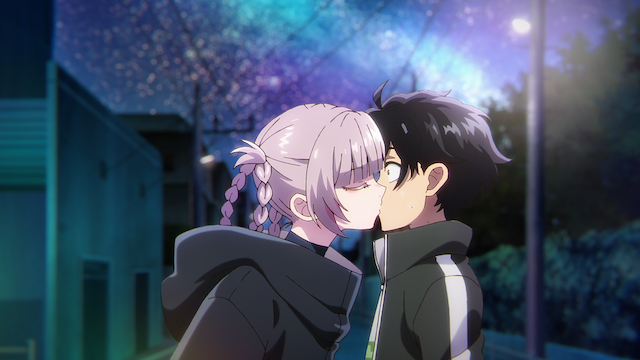
Might be that only 1 anime season is not enough to see the development of the characters, and do not get me wrong, there are some very interesting moments there like the fight among Nazuna and a rival vampire, or the sweet kisses that she surprisingly delivers to Ko in a couple of moments, being specially sweet the one at the end of season 1, but so far this is a couple that, different to other series, I do not feel deeply touched with their interactions nor rooting for them to be together. The visuals and art are quite stunning, so if you like anything vampire related, still sure give it a go. It is not bad, but it has not captivated me so far…

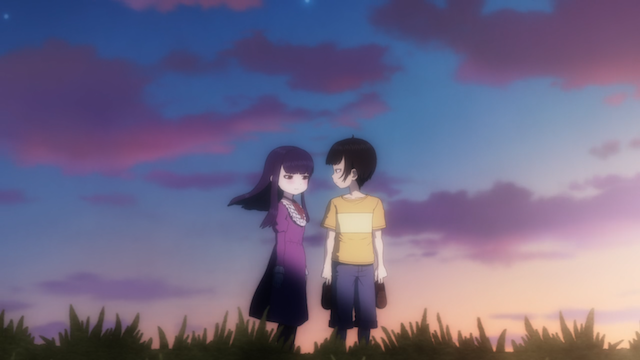
THE DANGERS IN MY HEART

I have become an absolute fan of this anime, and with a lot of good reasons. The series, that is actually available in Netflix, has 2 seasons so far and is based on the Japanese manga Boku no Kokoro no Yabai Yatsu also abbreviated as Bokuyaba by author Norio Sakurai

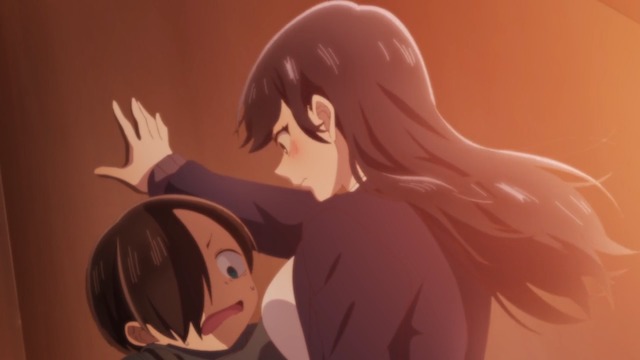
Its plot resembles in quite many ways the main features of the one commented at the start of the article, My Dress Up Girl, in the sense of portraying a socially awkward and isolated main character, Kyotaro Ichikawa, who starts to interact and forge a friendship and romantic relation with popular school beauty and also aspiring model and actress Anna Yamada.

Ichikawa is a really creepy fellow at the start of the show, with a lot of internal self loath and with dark thoughts of physical harm towards the ones around him, including Anna. This creepiness might have put off a lot of potential fans who could not digest the first couple of episodes where characters might seem quite stupid or mad.

However, if you give the series a chance and pass through those first couple of episodes, what you will find is one of the most wonderful rom-com animes ever made so far. Ichikawa shows that behind his lack of confidence, is actually quite a smart, caring and protective guy, and Yamada is just the impersonation of cuteness: she is loving, sensitive, sweet, not (very) narcissistic, full of positive energy and with an insatiable appetite for snacks.

It is a wonderful story between those two lovebirds, and again same as in My Dress Up Darling, we follow their amazing path as they support each other to grow as better young people. But the level of understanding of each other is probably even deeper here, and the attention to details in scenes is amazing. There are so many small cute funny moments thrown here and there, some of them might need a rewatch and you might not realize the care of the creators in building this amazing story, but they are there. I can highlight a few like Yamada not letting the hands go and screaming Ichikawa’s name when introducing him to her agent during a work photoshoot, Yamada holding a small gift that Ichikawa gave her telling the handsome guy hitting on her that she loves another and her hands are full, Yamada fishing for Ichikawa to compliment her as cute, her little jealous moments, Ichikawa growing in confidence screaming that Yamada is only hers or finding the inner strenght to give her an awesome gift in White Day and be able to express how beautiful she looks, Ichikawa’s speech during the graduation ceremony at school where he beats his inner ghosts and shows the great man he could truly become… so many big and small amazing moments of character development.

But here you see more depth also in the relations with the secondary characters and friends with special mention to Ichikawa’s older sister, a character that also grows in our hearts while the show advances and that supports in a very sweet way his little brother, and in a way, after every episode you just end up craving for the next one, like an addiction of emotions you cannot control. Yamada might be one of the cutest, if not the cutest, female character ever portrayed in a romcom, and the emo shy Ichikawa gains the hearts of the viewers taking small but decisive steps to become a better person and be worthy enough to consider himself a love partner for Yamada. It is a great work in his development physical and emotional through the show, where he is able to show that by being able to enjoy life also in the moments that is not with Yamada, he is worthy to enjoy her love too.

I also like that, again similar to My Dress Up Darling, sexual innuendos and dirty jokes are part of the dialogues, as it should be with effervescent teenagers, being realistic but also tasteful without feeling too lewd. A minus in the series, and I think many fans would agree on this, is that we see the story mostly through Ichikawa’s point of view, and would have been lovely to explore also a bit more Yamada’s side of things, which we catch glimpses by her actions and reactions, but we never get the allowance to explore her thoughts from her point of view.

What else can I say? If you have not seen the 2 seasons yet, go for it. I am just hoping that we will be rewarded with more seasons in the anime, while the manga is about to wrap up with a final volume that should be published soon. Let’s hope that these 2 find the happiness they have fought so hard for during every episode!

TORADORA!

One of the most famous anime rom-coms in history, and a very polarizing one for many fans, Toradora! came to my attention after I saw it mentioned restlessly in forums and by anime fans.

Adaptation of the manga by Yuyuko Takemiya, Toradora! narrates the evolving relation of the main character, Ryuji, a good behaved shy guy with obsession for cleaning and with great cooking skills who was abandoned by his father and takes care of his mother, with Taiga Aisaka, a small ball of energy prompted to violent attacks, but with a golden heart inside.

A kind of love entanglement develops with the series, as Ryuji is initially interested in Minori, the best friend of Taiga, a sporty cheerful beautiful girl who seems to be singing to herself all the time, while Taiga seems interested in Yusaku. Though a bit part of the plot is about Taiga and Ryuji trying to help each other to get a relation with their love interests, through the show and through the interactions they have is clearly developed a love relationship between them. Apart from this, there is a third girl, beautiful but narcissistic model Ami, who also joins the school and is interested in Ryuji.

As I said, I understand that many people could develop and kind of love/hate relation with the series. The relation between Taiga and Ryuji is not healthy at many moments and Taiga ‘s outburts of violent and diminishing behaviour could be a turn off. But if you go through that and understand that is a protection facade, the character of Taiga is really sweet, and I find exhilarating her nickname known all over the school as the table top tiger.

The script is awesome in many moments and will leave you some scenes forever in your mind, like Taiga screaming and caring after Ryuji suffers an accident at the pool. I never fully understood nor loved the character of Minori, and although you get here and there details that her personality is not at all shallow and there is an internal debate in her hart, I think that we never get to fully understand her, like if her character might have had much more potential… In fact, the character that I love how develops the most is Ami, who after losing her facade of narcissistic rude bitch, actually grows a lot showing to be the more mature and having a caring and loving hidden side. Probably in my opinion she would be the best suited to be a girlfriend in the real world. Some other subplots and scenes are also amazing, like the fight between Taiga and Sumire, and there are a lot of great touches of humor all over the show.

However, I also understand that the end of the series, although somehow is fresh, surprising and touching, leaves a bittersweet taste to the fans. All the arc of escaping from home feels a bit too forced to me, though it leads to maybe the most beautiful scene in the series with the first kisses between Taiga and Ryuji at the grandparents ‘ place where they spend a night together, a delicate and sweet scene where we also see the sweet and vulnerable side of Taiga. But her sudden disappearance at the end until the final surprising encounter in the classroom… it kind of feels refreshing compared to how many other series wrap up, but at the same time it feels somehow unsatisfying, and we wonder if Taiga is really the right partner you d like to be with, as sometimes feels like interacting with her is walking across a minefield.

I know, after having read online what happens after the series, that the two get a nice happy ending together, but still, as I said, though I did enjoy the show a lot and is a delightful rollercoaster of emotions, and though Taiga ‘s energy can be really captivating, some moments and actions in the show feel a bit off. In any case, it is undeniably one of the best romance anime series ever produced, and although it was broadcasted already quite a few years ago, it has not lost at all its freshness and appeal. A must see if you are into Japanese romance anime or, same like me, you are starting to explore this wonderful universe!

HI SCORE GIRL

Hai Sukoa Gāru in Japanese, the series is based on the manga by Rensuke Oshikiri, and oh boy! For a fan of retrovideogames who lived his pre-teenage years in the popular arcade saloons, this series will always take a special place in my heart.

The story follows a young gamer, Haruo, whose life is pretty much obsessed with videogames both playing with home consoles or at any arcade machine that crosses his path. His life will be transformed when he crosses path with Akira, a silent female classmate (so silent that she never speaks a word all over the 2 seasons of the series) and amazing videogame player, one of the few able to beat Haruo’s ability.

Haruo’s hate for the new challenger will be transforming through the series into a very special and sweet love relation with Akira, with a second female student, Koharu, getting dragged also in the gamer life pursuing her non correspondent love of Haruo.

The series is pretty much amazing, and displays so many anecdotes, historical facts, winks and tricks based on real life from a lot of the most iconic videogames in the 90s that is pretty much impossible not to love it for anyone calling him/herself a gamer. Haruo’s character although at first can be annoying gains the hearts of the viewers as inside him there is a big good naive heart, and it is really amazing how the writers were able to perform so beautiful interactions between them with Akira not muttering a single word. It is even more memorable that in several scenes of the game, the characters are able to express their feelings and the emotions just by how they interact during the games that play together.

The final theme song also by the way got stuck in my head for weeks, a beautiful lullaby that you cannot get rid of. Also, the secondary characters such as Haruo’s mother or Akira’s older sister Makoto are pretty memorable and funny, and round up this beautiful story.

If I can put a weak point, i would just say that I would have truly loved a kiss between them both main characters, though their feelings were clearly expressed in the final airport scene of the series If you like romcom anime, give it a try, though the art and drawing style can feel a bit more childish and not so beautiful like other anime, it is super charming. And if you are a retro video games lover, this series is really a must see!

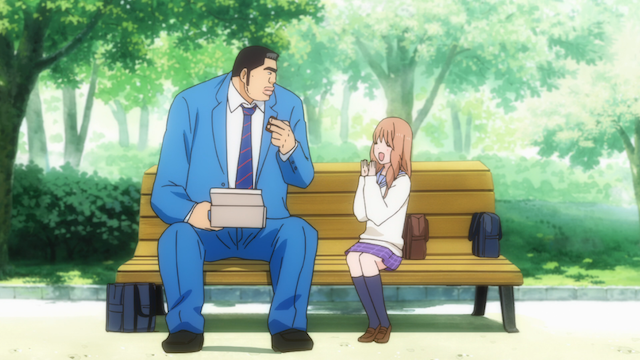
MY LOVE STORY

I watched it not expecting anything much, just surfing around anything new to kill time a night in Netflix, and My Love Story grew into me immediately. The series counts so far with just 1 season with 24 episodes, being its title in Japanese Ore Monogatari!!; lit. “My Story!!”, created by Kazune Kawahara.

It follows the story of Takeo, a young student with a huge physical frame, hyper talented for any sport activity and with a golden heart, but with no filter in his words and little knowledge of love. He is inseparable of Makoto, his very handsome, shy and book lover friend who seems quite uninterested in girls attention.

Quickly in the series Takeo will help and meet Rinko, a beautiful young student who loves baking cakes and sweets, and with the help of Makoto, Takeo will realize about her love and they will start dating.

Opposite to other series, here there is no suspense about the declarations of feelings and gets resolved pretty early on. So the series is nicely following Takeo and Rinko growing as a couple, as well as Takeo growing as a person and helping others around him all the time. There are a lot of nice details here, like Takeo’s good actions often do not get the credit he deserves, but is lovely to see how Rinko is able to see him through and through while others would get deceptive first impressions due to his physique.

I also love how, although Rinko appears to be like the super sweet innocent anime girl, she actually takes a lot of initiate in meeting Takeo, showing her feelings and also in provoking more physical advances and kisses due to Takeo’s too much innocent heart. And some of the fans might have got nervous towards the end of season 2 when a competitor tries to steal Rinko’s heart. A very nice arc in the way how we see that Takeo would sacrifice anything for Rinko’s happiness, even his relation.

On top of that, I must say that one of the most memorable love actions in the series is not done by the main couple, but by one of Takeo’s friend, Kurihara, who climbs a huge Christmas tree risking his life to grab a decorative start to show to his love interest, Nanako, that he is worthy of her love interests.

A very lovely series, and though Takeo would not be your typical main character in this kind of romcom, he really gains your sympathy with his actions and his huge heart while Rinko is just an overload of cuteness but with the right amount of spicy behavior to cheer things up.

A gem of an anime: Blue Box

I have always loved Japanese anime since my childhood years when series like Dragonball blew my mind and I think all the minds of my friends and school kids around the world, trying to imitate Goku doing the famous kamehameha movement. Mazinger Z, Dodge Danpei, Dragon Quest... so many amazing memories from those years in front of the TV screen.

The anime genre also had some great jewels in sports/romance in those years, I fondly remember Attacker You! or Attack Nro 1 that were nicely mixing love with volleyball sport.

I did not come back to the romance genre in many years, though I have seen in my adulthood many other great anime series like Attack on Titan or The Seven Deadly Sins. I was a bit bored at home wanting to watch something new, so I chose a Japanese series I had no idea what was about: Blue Box.

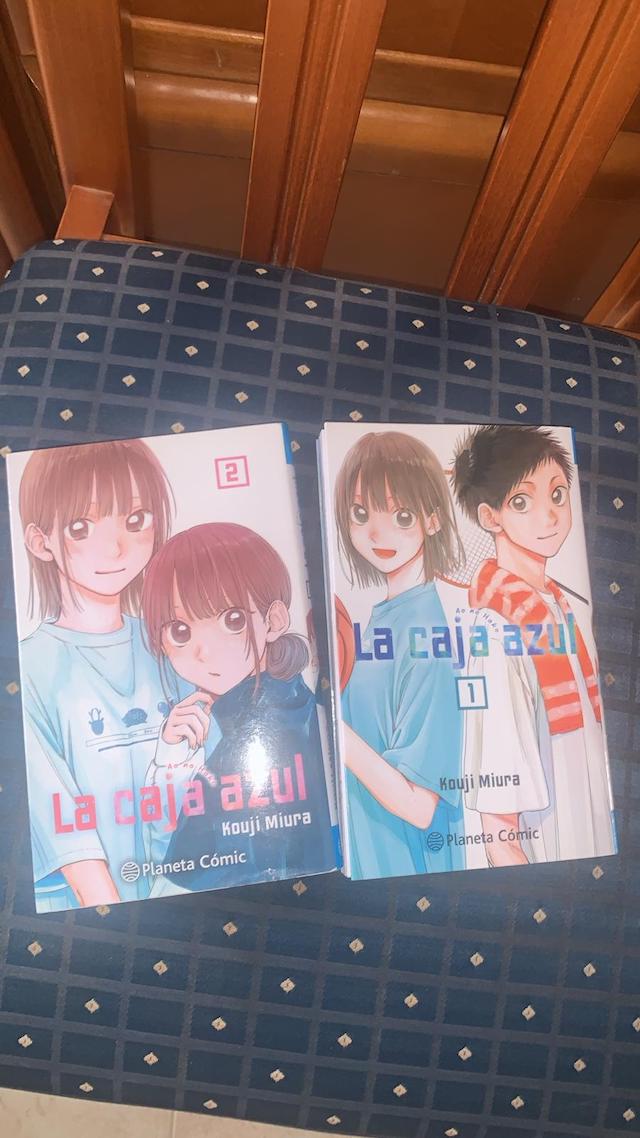
The series, that is currently available for its 1st season in Netflix, is based on the manga books series Ao no Hako by Kouji Miura, and follows the life of Taiki, a high school Japanese student who loves training and competing in badminton, while having a secret crush on fellow student Chinatsu, the start of the basketball school team. Adding to this, there is Hina, a cute chilhood friend of Taiki, start in the gymnastics team, with a funny straightforward personality and a love for Taiki and starts in secret but she has the nerve to declare to him.

When I watched the first episode, at first I thought, oh gosh this is so slow and lame, just for female teenage watchers, but the show captivated me quickly. The dialogues and situations are very nicely written and developed, slowly but steadily, the main characters are very likeable, the art is beautifully transferred from the book pages to the animation, and apart from the classic themes of love, shyness, misunderstandings and uncomfortable situations of the teenage years, there are also great moral values in the way of overcoming loss, trying to push the limits, working hard every day to give a better version of yourself, and friendship.

The secondary characters sorrounding Taiki’s life, like Hayru, an older player that pushes him to train harder, Kyo, who in the shadows seems to be the first to understand the situations or the funny and I think sometimes underrated Nishida, who has a gold heart even when often blurbs silly comments, are very well balanced. And Chinatsu is lovely from her voice, her actions, and her slowly shift of attention to Taiki. In a way it feels that even if we see the relationship form from the eyes of Taiki, she was already there interested from the first episode, something that Taiki himself does not realize most of the times.

Maybe what hit me hard and deep in this show is the memories that brings of some of the best years in life, when all is new and exciting and the world is full of potential possibilities: being the last one to notice small gestures that your friends notice, dreaming what the girl you like is gonna wear for a date next day, how just holding hands or close physical contact can make your heart race… that beautiful time that will never come back, but that we somehow can live again following Taiki and Chinatsu’s love story.

The show builds up slowly, do not expect here declarations of love from the first episode, but is a visual delight and you really feel like you cannot wait to watch the next one. For the moment Netflix has aired only Season 01, although for what I could see online, there is a Season 02 programmed for this 2026, while the original manga has advanced more in the story. I recommend both the manga books and the series, as the adaptation is fantastic and if you like Japanese anime, sports and a good love/romance evolving, surely you will enjoy this, no matters if you are a young teenager of a man in his mid forties like me. Give it a shot, it is one of the gems recently released for anime fans!

A hidden Gem of a museum in Lisbon: Museum of Contemporary Art MAC

Belem is probably the most visited neighborhood in Lisbon due to holding some amazing touristic treasures such as the Jeronimos Monastery, which is probably the number 1 sightseeing highlight of the Portuguese capital, or the archfamous Belem Tower.

However, it might be unknown for many art and cultural lovers that a few steps away from the Jeronimos Monastery, inside the Cultural Centre of Belem, there is an amazing museum not very crowded and totally worthy a visit: The Museum of Contemporary Art of Lisbon MAC.
This Museum was actually known with a different name till 2023, The Berardo Collection, initiated by Jose Berardo, a Portuguese business man and obviously an avid art collector. Berardo unfortunately could not pay a huge debt to the Portuguese government, that seized his collection, and a part of it is exhibited today in the Museum.

The ticket for entrance costs 15 euro which is not cheap but not a bad price for the quality of the exhibitions, and if you are a resident in Portugal, you can visit it for free on Sundays until 2pm.

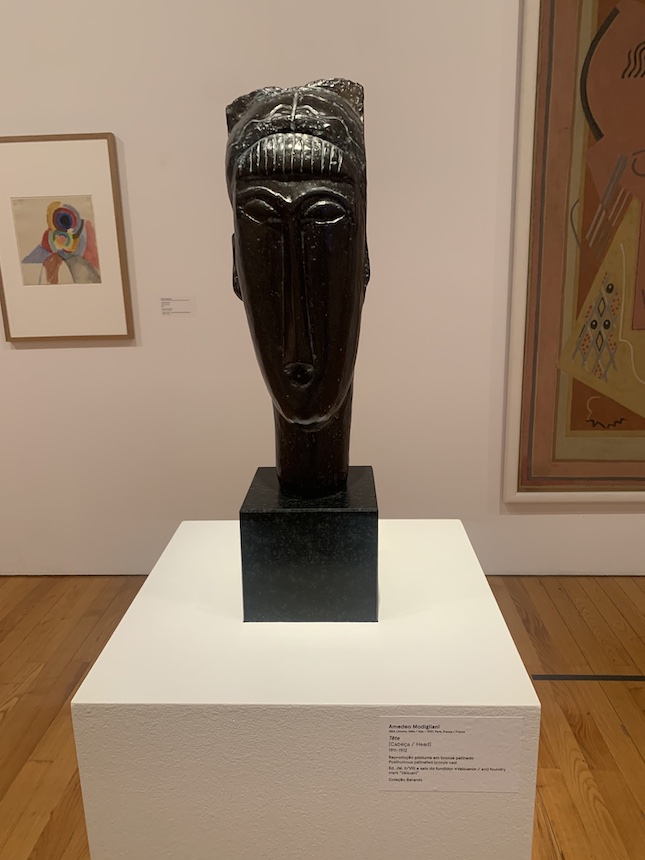
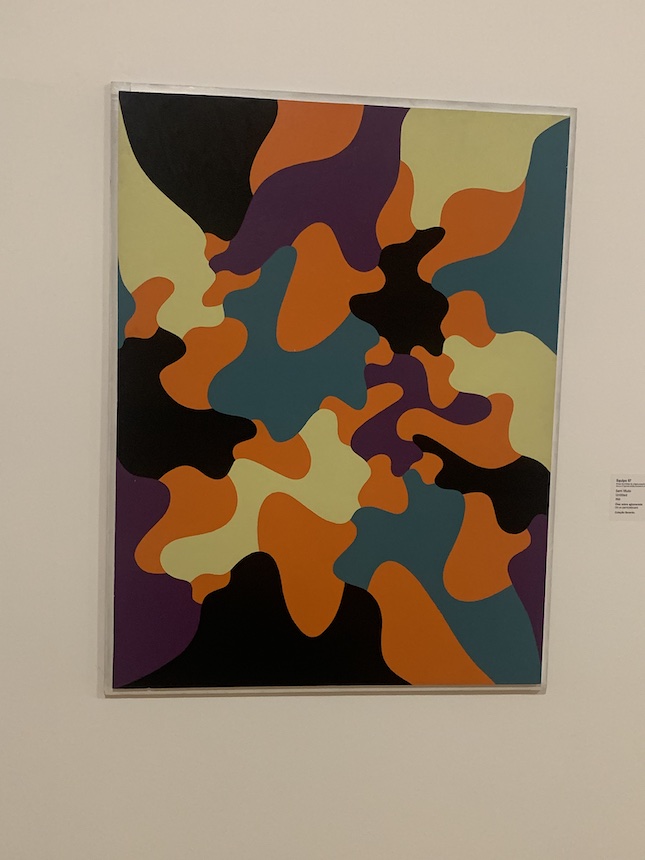
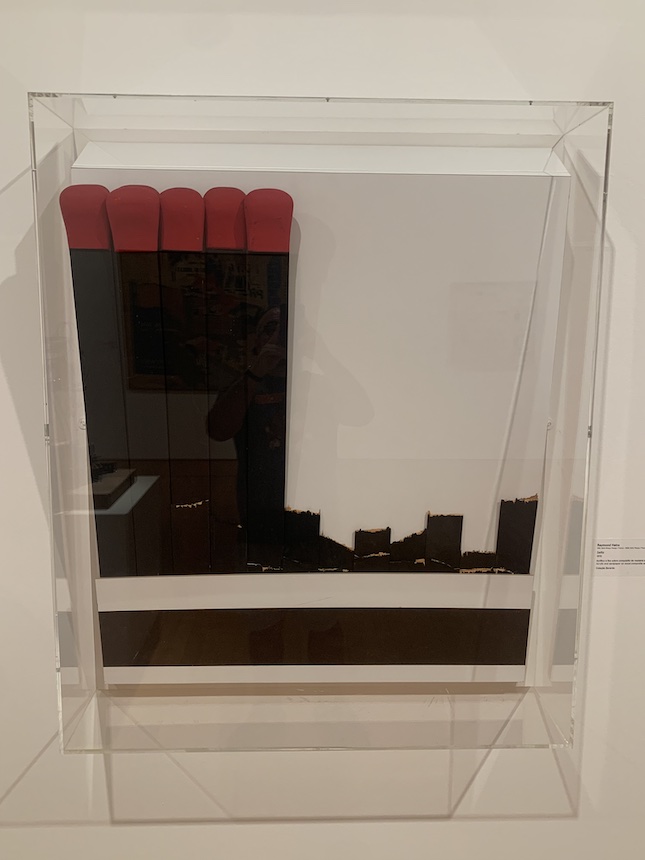
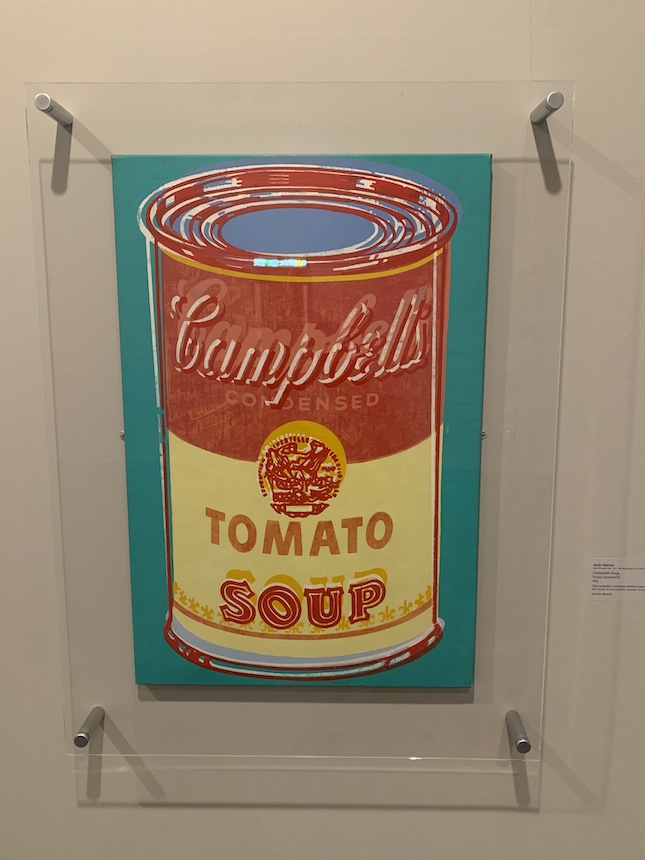
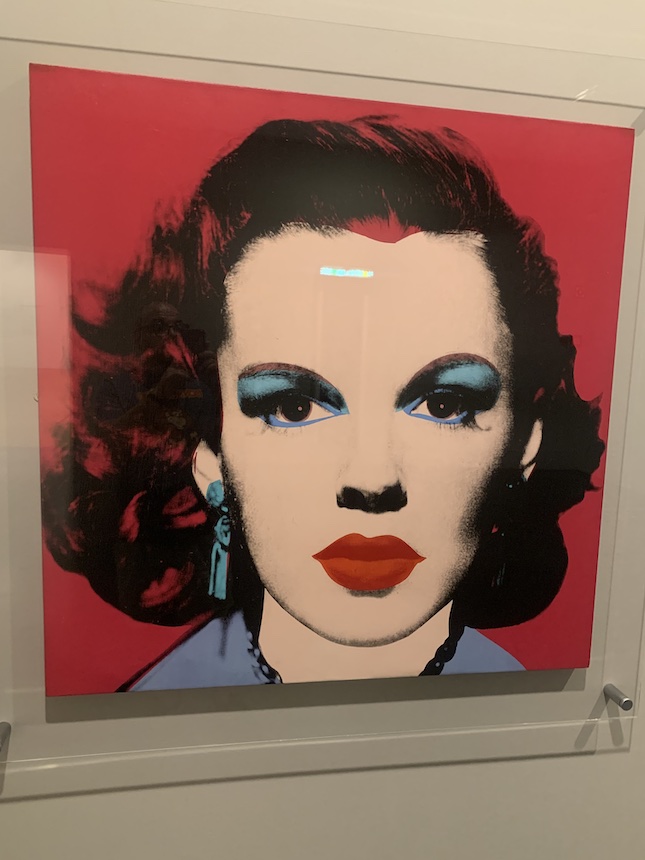
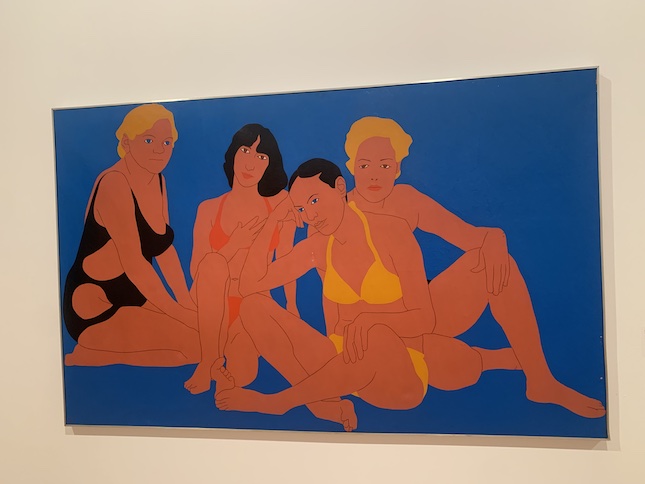
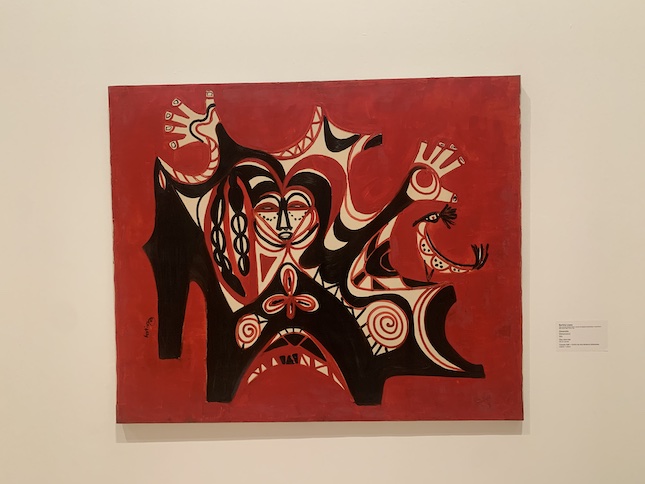
The staff at the museum is quite friendly and encourages you to do the tour from the upper floors to the lower floors in chronological order. Once you advance, you will find artworks from some of the most famous contemporary artists that belonged to movements such as minimalist, pop art, surrealism or cubism, such as Modigliani, Dali, Picasso, Pollock, Malevich, Andy Warhol or Roy Lichtenstein, to name a few.

While the upper floors are more dedicated to paintings and some sculptures, the lower floors have some huge art installations, maybe too modern for my taste, but I enjoyed a lot some of the pop art rooms, specially the ones with works from Warhol and Lichtenstein.

The day that I visited, there were only a few more people roaming around, so you can really enjoy the corridors in relatively peace, and when you finish the tour, the museum also counts with a very cosy cafe/shop, even having a nice outdoors terrace, so you can enjoy a snack or a coffee almost sighting directly the Jeronimos Monastery in a beautiful park where there are ducks wandering around. Pretty idillic.

If you have enough time in Lisbon and you are an art enthusiasm, or you already visited the other main attractions, give it a try, although it does not have the fame of other museums in Lisbon such as MAAT, it is quite a hidden treasure to explore in Belem area!

For other great places to visit in Lisbon, check:
https://www.freemagazine.fi/a-hidden-gem-in-lisbon-lisbon-city-museum-palacio-pimenta/

A small cosy art museum in Lisbon: Rafael Bordalo Pinheiro Museum

Among the fantastic array of bigger and smaller museums and art centers that Lisbon has to offer, you can find one for almost all tastes. But once you have visited the most famous ones that dedicate bigger budget to their collections and to advertising, such as the Gubelkian Museum or the MAAT, you might feel hungry to discover some small “hidden gem” of a place in the charming Portuguese capital:

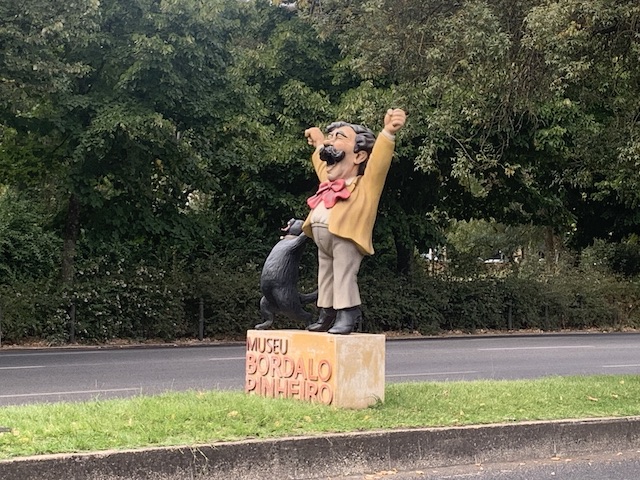
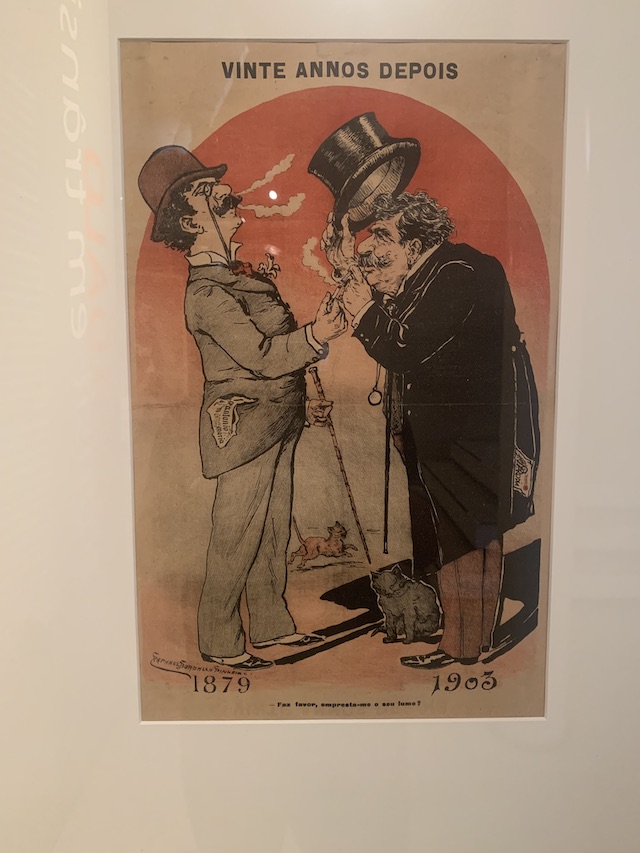
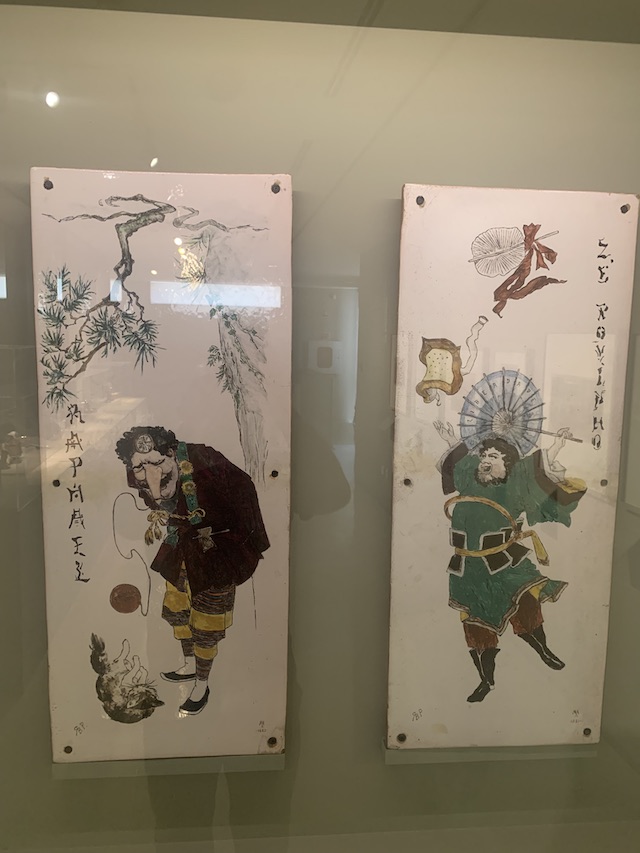
As an art aficionado that I am, today I directed my steps to the small and cosy Rafael Bordalo Pinheiro Museum, a house-museum dedicated to the Portuguese painter with the same name that lived between 1846 and 1905 and left a big legacy in multiple artistic areas: comic, painting, illustration and ceramic design.

A beautiful display of his work with representations from his drawings, his comic characters and his ceramic design is found in this museum that consist of 2 houses separated by a patio, accessing by a beautiful alley covered by plants with very nice cat design ceramics on its walls.

The Rafael Bordalo museum is very easy to reach as it is a short walk away from Campo Grande metro station, and in the same area there are some other interesting museums such as the Lisbon City Museum Palacio Pimenta that we dedicated a separated article to in the past: https://www.freemagazine.fi/a-hidden-gem-in-lisbon-lisbon-city-museum-palacio-pimenta/

It can be visited relatively quick, as it is small, with the main building divided in 2 floors and an adjacent workshop where I saw some activities taking place, while on the building in the opposite site there is the library and the ceramic works. You can clear the visit in 30 minutes, but the price is quite fair for just 3 euro, so it is really worthy if you are in the Campo Grande area. Give it a try!

Official website of the museum: https://museubordalopinheiro.pt/en/welcome-to-museu-bordalo-pinheiro/

A gem of a game: Unbound: Worlds Apart

I must confess that I get a special kick when I find a physical copy of a videogame in a physical shop whose title I had no idea about before…and then I truly enjoy it when I start playing it.

My favorite genres are shoot em ups, beat em ups, platforms and adventure, so anything new that was not under my radar and that I find sitting on a shelf with a reasonable price catches my eye to investigate more online about it and see if worthy to purchase.

That was the case last weekend when I was exploring some CEX videogame shops on the other side of the Tagus river in Lisbon (sadly the offer for videogame shops in the Portuguese capital is quite limited compared to my hometown Madrid, but still, something can be found here and there with effort and patience).

The last particular CEX I visited was by far the more interesting one, specially about Ps4 catalogue there, my favorite desktop console to play nowadays (I have a wide array of retro and portable consoles in my collection, but desktop consoles were always my favorite from my teenage years with Atari 2600, Megadrive, etc and besides, I can connect my Ps4 to a projector that gives me almost a home cinema at home to play, so I always prefer purchasing Ps4 more than Switch).

As said, the Ps4 offer was surprisingly nice, I have the feeling that some Ps4 collector had sold them a few titles recently, and you could find a few unusual games among the typical Battlefields, Assasins Creeds etc that populate most of the shelves in most of the videogame shops around the world.

Unbound: Worlds Apart caught my eye due to its beautiful cover and well looking screenshots. Initially I did not plan purchasing it, but after I exited the shop to use my electronic vaper and I saw some gameplay and more information about it, decided to go for it, as seems like a title quite scarce to find physically nowadays.

I started playing it at home 1 week ago, and I must have logged around 8-9 hours of gameplay. I must say that I am really liking it. The game art is super beautiful, colorful and with great taste in all the areas I explore so far. The music is fantastic, and the game mechanic is really refreshing: in a nutshell it mixes platforms with puzzles, as it adds a button to the main character (a cute kid magician whose village has been attacked) that opens a parallel universe with different elements on screen than the main universe he is passing through. In that way, you need to combine and think about what actions to take in both universes to go through the obstacles.

It does feel a bit like a boss rush game, but instead of having to kill hard enemies often, you need to pass through mini puzzles and challenges in the landscape using your brains and measuring your actions about how and when effectively open the parallel dimension and use its elements in the UI to your benefit.

This might sound complicated, but once you start playing, it gets very naturally adapted and learnt as the main game mechanic. And the difficulty balance is so far quite well measured. A few puzzles and areas might feel a bit frustrating, but after a few trials you will be able to advance and go on. It feels challenging but not to the point of feeling like you are going to be stuck for long without discovering more areas in the map. Besides, the game also includes fast travelling among checkpoints, which helps to keep the pace without the feeling to be repetitive. And every area has a distinctive art and change in skills in the parallel universe you open, so it adds variety and I have not felt bored at all while playing it.

I would say that Unbound: Worlds Apart might be considered like an unrated hidden gem, as has not got so much mainstream attention as might deserve. But give it a try online, or if you happen to cross paths with a physical copy, go for it, as I have the feeling that might be a title that is gonna increase its value in the next years as a true hidden gem of platform marvel.

A must see in Lisbon: Bansky Museum

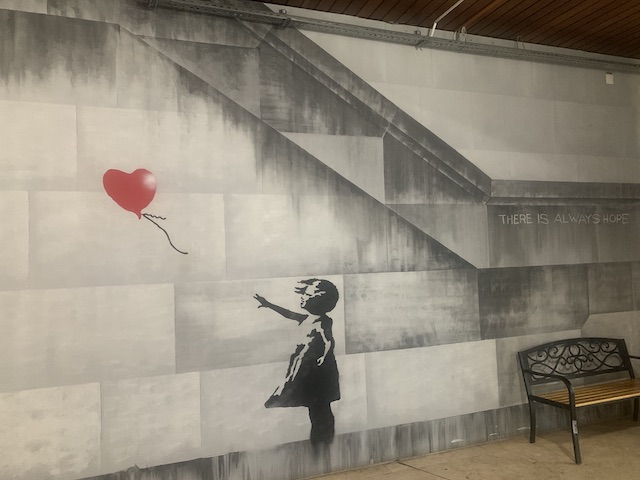
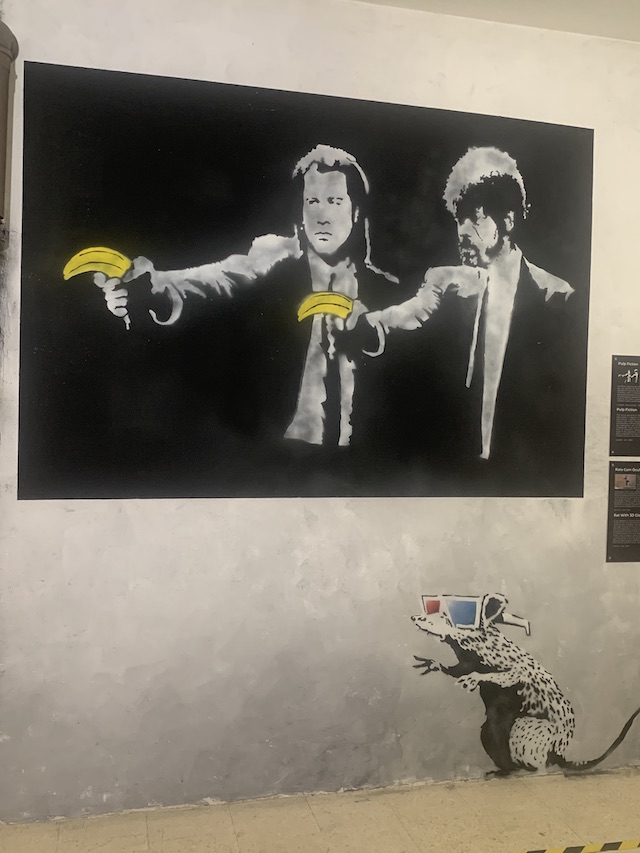
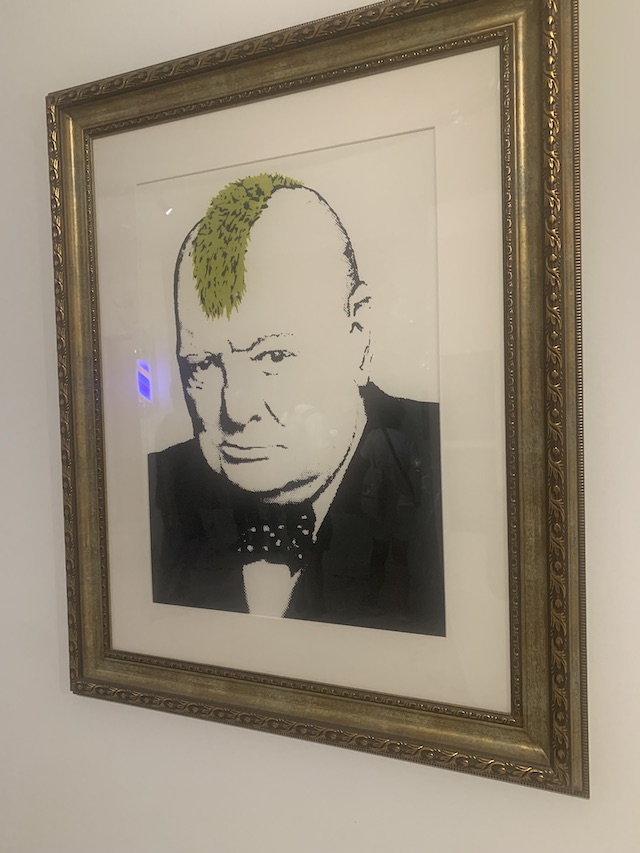
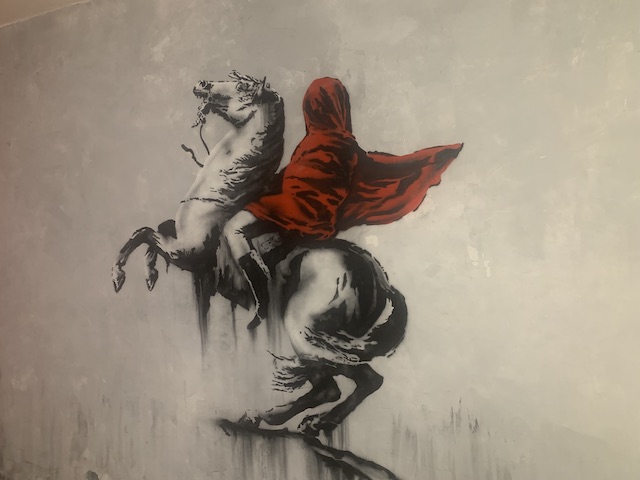
Bansky, the probably most famous street artist in the world, has been for decades a symbol for many anti-system beliefs around the world. His enigmatic persona, as nobody knows who is the person behind the artist, his recognizable trademark in his street art, where he uses the environment as part of many of his works, his anticapitalist message, his mockery of the art establishment… Indeed Bansky is a figure to be studied in detail, and some of his works are now super famous…and super expensive.

However, due to the nature of his work, scattered in different countries and cities, and that many of the graffitis have been simply destroyed or stolen from their original locations, it is pretty much impossible to have any exhibition where art lovers could contemplate a big chunk of his production.

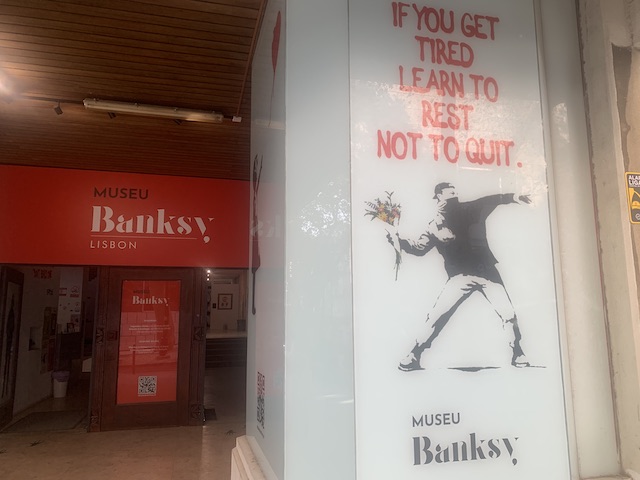
With that idea, Bansky Museum opened in Lisbon recently in January 2025, as as the Portuguese capital is my recent new home due to work, I decided to pay a visit on this sunny Sunday.

The museum is very nicely located at the heart of the city, just a short walk away from Saldanha metro station, so there should not be any problem for visitors to find it.

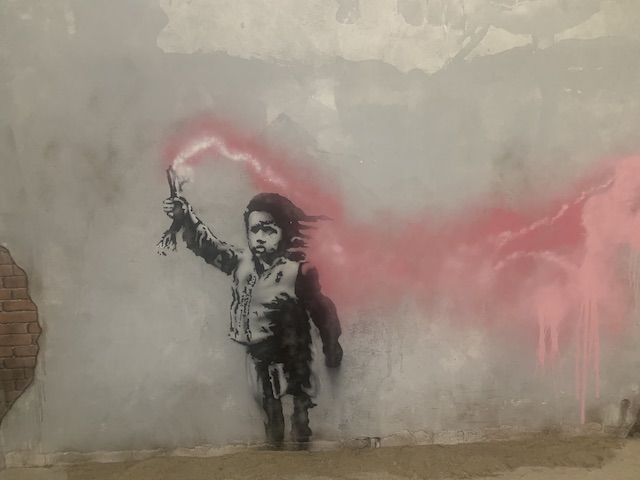
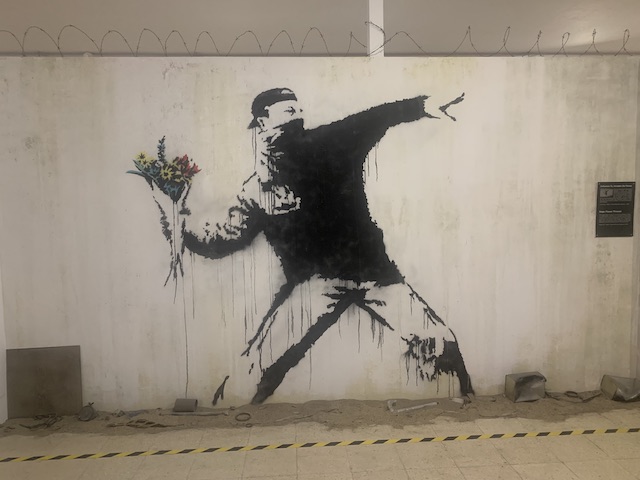
What you will find is 2 floors where the visitors can immerse in his work, with real size graffiti reproductions, smaller pictures and drawings and some video displays that show you some memorable moments in the life of Bansky. I got mesmerized watching in the TV the part where they sold in New York his authentic work in a street market…and almost nobody bought anything. Once again, Bansky has a laugh at the art establishment and the capitalism rules.

Photos are allowed to be taken all over the exhibition, and almost needless to say that the place is honey to take some great memories for your Instagram and social media. The staff is friendly and there is explanations of most of the art works written in Portuguese and in English, so you can learn more and feel quite free roaming inside its walls.

One thing that I must say that I did not like so much is that while Bansky spirit embodies a lot of anticapitalist ideas, the entrance to the museum costs 13 euro for adults, not cheap. And at the end of the visit to the museum there is the museum shop where you can buy a lot of memorabilia…but again not at a cheap price. I found funny that there was a painting by Bansky criticizing how assistants to a music festival buy t-shirts for 30 dollars…just close to the museum shop where the items costs also quite a lot…

All in all, if you are an art lover and 13 euro ticket is not gonna break your wallet, this place is super recommended if you live or you are planning visiting Lisbon. It will not take a lot of your time, a visit can be enjoyed in 1 hour or less, the displays are stunning and it is an unique opportunity to see most of Bansky’s iconic works or discover some new ones you did not know about, all gathered in one place.

For more amazing places to visit in Lisbon, check:
https://www.freemagazine.fi/a-must-see-in-lisbon-carmo-archeological-museum/

(R&A Film Festival Finland) HIFF’s National Competition awards one with a trip to Thessaloniki

Multiple awards will be handed out among the filmmakers selected for this year’s R&A Shorts: National Competition. The winner of the AGORA prize, which is being handed out for the first time, will win the opportunity to participate in the AGORA Short Film Lab workshop in Thessaloniki in November.

R&A Shorts: National Competition will once again shine a light on exceptional Finnish short film talent as part of September’s Love & Anarchy Film Festival ( 18–28 September). This year the competition, which has been held since 2018, received a record-breaking 188 film submissions. The 29 films that were selected will be presented in 6 screenings, categorised by themes. The Jury and the audience will select their favourite films, which will be rewarded during the awards ceremony at the festival centre in Bio Rex, on Thursday 25 September.

Many incredible awards will be handed out to winners, including a new addition, the AGORA award, sponsored by the Thessaloniki International Film Festival and the Finnish Film Foundation. The winner of the AGORA award will be granted the opportunity to participate in the AGORA Short Film Lab, held at the Thessaloniki Film Festival industry event in November. The AGORA will be awarded to a director who has yet to direct a full-length feature film.

This year’s judges will include writer and activist Maryan Abdulkarim, the contest’s first international judge and Agora representative Angeliki Vergou, as well as Leena Närekangas, executive director of Elävän kuvan keskus ELKE ry, the cultural association that runs Cinema Orion.

The best Finnish short film will receive the R&A Shorts main award, a cash prize (2000€) made possible by the Trade Union for Theatre and Media Finland, Teme. Sponsored by the Finnish Film Foundation, the New Wave award (1500€) will be awarded to a fresh talent whose short film paves the way for new voices in Finnish filmmaking. The award aims to support the career of a promising director and assist in the funding of their next project. The Moving People and Images award (1500€), given out since 2021, will be awarded to a director whose work pays particular attention to inclusivity and diversity. The award is sponsored by the Finnish Film Foundation. Filmmaker Erol Mintaş will act as an advisor to the panel of judges in picking the winner.

The winner of Best Student Film will be awarded accreditation to the 2026 Love & Anarchy Festival and to the industry event Finnish Film Affair, as well as music licensing from Audio Network. Student films are also in competition for other awards. In addition, all films in the National Competition will be competing for the Audience Award, which is a product prize worth 2000€, sponsored by Kinos Rentals.

The winner of the main prize in 2024 was Elina Talvensaari’s documentary How to Please, which later in 2025 won the Jussi award for Best Short Film.

All award-winning films will be screened at Love & Anarchy on Saturday, September 27 in the National Competition: Award Winners screening.

The films in competition will be shown in themed screenings at Love & Anarchy on September 19–23:

Within Memories
The screening showcases five stories about memories and remembering.
Memories Move Like Distant Islands (dir. Saarlotta Virri)
Memorabilia (dir. Roosa Vuokkola)
Akira (dir. Juho Kankaanpää)
Vieras (dir. Arman Zafari)
In My Hand (dir. Marja Helander, Liselotte Wajstedt)

Other Dimensions
Journey through the uncanny valley.
Astro TV (dir. Magdaleena Jakkila)
The Grapes of War (dir. Malakias)
IURIMA – A Tale of Three Fishermen (dir. PV Lehtinen)
Katastrofielokuvien loppukohtauksia (dir. Tellervo Kalleinen & Oliver Kochta-Kalleinen)
Tempest of My Eyes (dir. Elina Oikari)

Geography of Life
Cartographers of change – people in spaces and situations.
Confessions of Undecided Women (dir. Milja Härkönen)
Ocean Blvd (dir. Jade Kallio)
Juhlat (dir. Roope Lainevuo)
Break Room (dir. Laura Böök)

Side by Side
Relationships, people, nature.
Try Me <3 (dir. Susani Mahadura)
Dollhouse Elephant (dir. Jenny Jokela)
Lovetanssit (dir. Sara Maaria Peltonen)
Farewell to Snow – Snowplay (dir. Sanni Priha)
Pastori ja ruma joulukuusi (dir. Maarit Lalli)

Oh Humanity
A look at the entire spectrum of humanity.
Underdog (dir. Marjo Levlin)
Speeding, of course (dir. Anni Sairio, Joonatan Turkki)
Miss Paradise Beach (dir. Virva Kunttu, Vuokko Kunttu)
Invasive Species (dir. Risto-Pekka Blom)
My Name Is Hope (dir. Sherwan Haji)(

Chosen) Families
Families that love, hate, and hurt.
ÁHKUIN (dir. Radio-JusSunná / Sunna Nousuniemi & Guhtur Niillas Rita Duomis / Tuomas Kumpulainen)
A Night That Took Everything (dir. Nida Mehboob)
Drawn in Water (dir. Heta Jokinen)
Pantyhose (dir. Fabian Munsterhjelm)
The Lightning Rod (dir. Helmi Donner)

For more information visit: https://hiff.fi/en/

The End of the F***ing World – a hidden gem in Netflix

I have a totally subjective opinion and it is that in the last decade, the overall quality of TV shows is much better than the overall quality of movies. Bigger budget, better casting, nice scripts (if you can except the woke topics that flood many shows) and a consumption rythm that probably fits better the modern society, when people might not have the time, energy or focus for a 2 hour film, but will easily swallow a 25-30 minutes episode before hitting the sack.

I am finding very difficult in the last years to enjoy movies in Netflix, basically cause most of the good ones in its catalogue I already watched in the past, though there is always a nice new one here and there, but with TV shows, I ended up gladly surprised with the quality of 2 that I watched recently. One is Resident Alien, to which I will have to dedicate a separated post. The other is The end of the Fucking World.

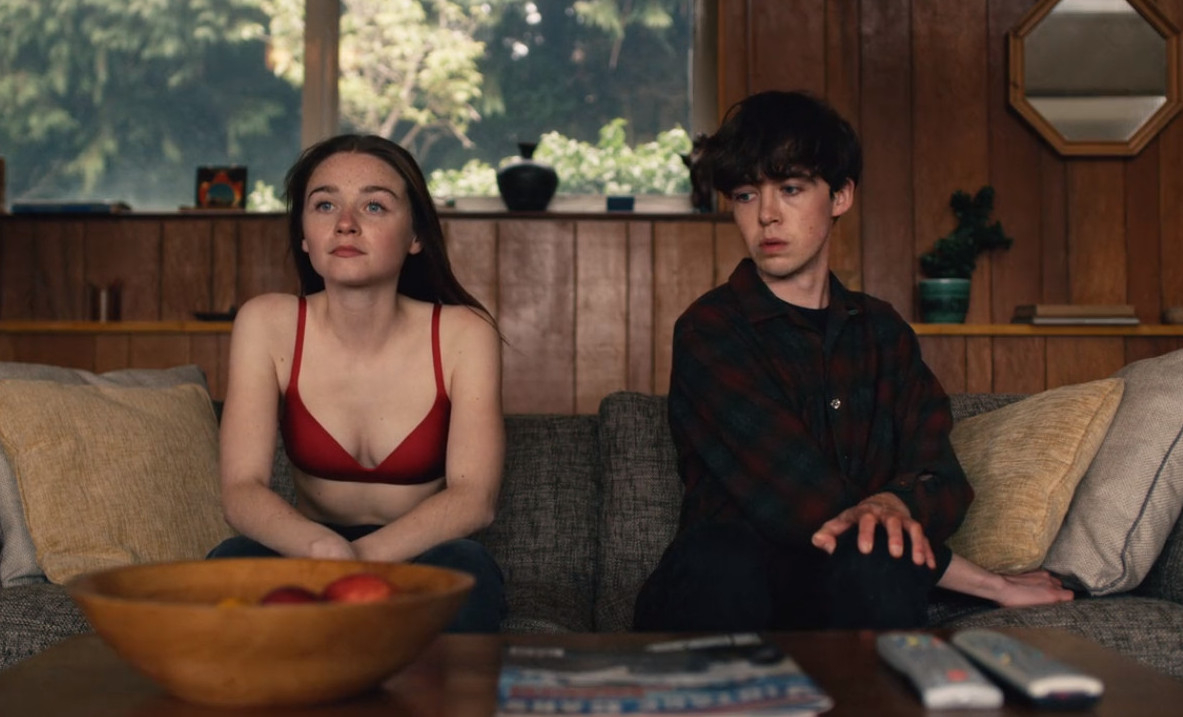
The show has 2 seasons so far available in Netflix, and I hope that stays like that. It follows the adventures and misadventures of James and Alyssa, who start in the first season being 17 years old and on the second season they will mature a bit more to reach 21.

They are not your typical teenagers, and the series is not your typical politically correct series either. It is dark, strange at many moments, cruel but also funny and charming. Both James and Alyssa have serious psychological problems and traumas, and you will feel loving one of the characters in one scene and hating the same character 5 minutes later.

The first season is structured as a kind of “teenage Bonnie and Clyde run away on a road trip” and although the characters communicate weirdly (James ‘ favorite answer is Okay), they talk and act inapropiately and their moral compass turns 360 degrees with no polar star to show them the right way, after a few episodes you feel connected to them.

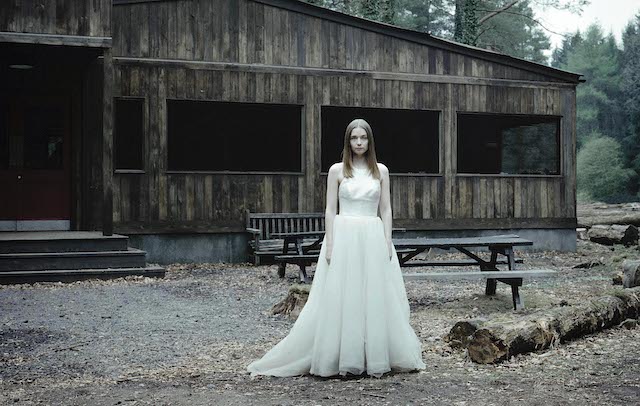
Great blame on this are the great interpretations by the 2 main actors, Jessica Barden as Alyssa is a jewel, and if you are male you cannot less than feel that she could be the kind of girl you would fall in love in high school just to make your life absolutely miserable. James is played Alex Lawther, whom you may recognize from an episode in Black Mirror, and although his role tends to be more passive and can get eclipsed by Alyssa’s energy, he is the perfect complement to the chemistry of the couple all over the show.

In season 02, and we try not to make spoilers, James’ character indeed seems to have matured, while Alyssa seems to be the one that took a bigger emotional toll from all the incidents that they go through in S01. I personally preferred the first season for being something more refreshing to watch, and probably for having more witty dialogues, but still season 02 is quite a nice epilogue and a wrap up for the adventures that the young couple suffers, and the ending at the last episode, although is not your typical romantic ending, feels in a way perfect, heart-touching and satisfying.

Without the need to have a huge budget, striking special effects or a very famous cast, I deeply enjoyed the show and I consider it one of the best I have watched in recent years. Besides, what it has all over its episodes is a superb and amazing soundtrack, kudos to the responsible person to select the songs, which makes up for a fantastic Spotify playlist once you have finished watching the first two seasons of the show.

If you are looking for a new series to watch, and you want something refreshingly different to most of the shows out there, give this one a chance. Dark, witty, sometimes funny but overall very magnetic!

A hidden gem in Madrid: The Royal Chapel of St. Anthony of La Florida

Madrid, the Spanish capital, is one of the most attractive cities in the world to visit. Its wide variety of offer in gastronomy, parks, historical sites, vibrant nightlife and museums make it a favorite destination for hordes of tourists through the year.

As the local people say (I am one of them), the only thing that Madrid lacks is the beach!

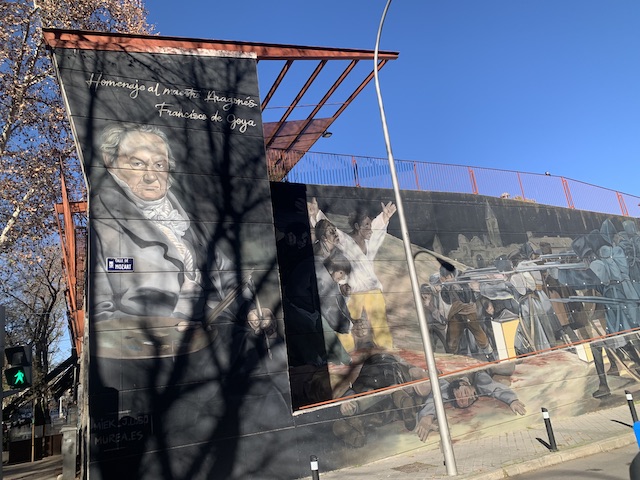
In its cultural offer, it shines to hold some of the best museums in the world, and the most famous one is probably The Prado Museum, with one of the best classic art collections you can ever see gathered in one place. One of its highlighted painters is Francisco de Goya, who could easily be considered in the top 10 of most influential painters all over history.

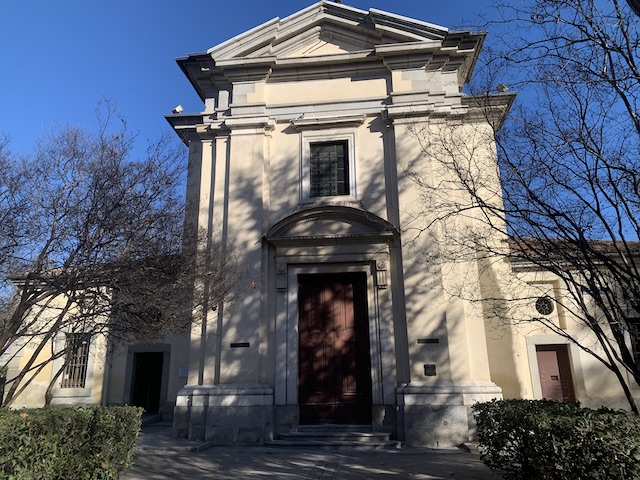
But what might be unknown for many visitors and art lovers, and even for some locals, is that you are able to admire Goya’s artwork for free in some other beautiful spots of the city, such as San Antonio de la Florida chapel.

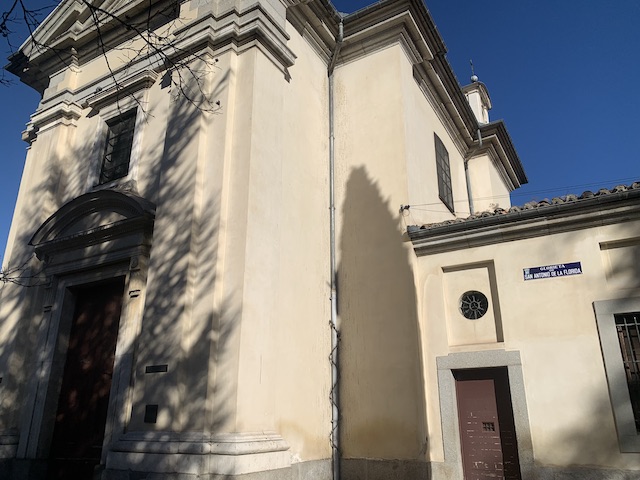
The beautiful historical place was built in 1730s, and is very easy to reach as it is just a short walk apart from Principe Pio train/metro/bus commuting station, one of the most important transport hubs in the south of the city.

The entrance to the chapel is totally FREE of charge, and you should take the opportunity to enjoy this, as you will not find many places in the world where you can see original artwork from one of the most famous painters in history without having to pay an entrance ticket.

The chapel holds the remains of the painter himself, so it is a tomb on his own, but what this place is famous for and what delights the visitors are Goya’s original frescoes in the ceiling.

Mind that the building is not very big, and so your visit will probably not last more than 15-20 minutes, besides there is the not so nice point that authorities do not allow taking photos inside, so you can only photograph the exterior of the building.

In any case, if you are in Madrid or planning a visit, and want to visit some amazing spots that are a bit out of the beaten tourist path, this one should be on your list. Even when being a small area, it tends not to be packed with visitors (unless you are unlucky and some organized tour stops by at the exact time of your arrival), so it can be enjoyed in a relaxed way, and the sorroundings of the chapel are beautiful with parks with benches to relax and restaurants and terraces where to have a drink or a bite and enjoy the beautiful Madrid weather. And once again, entrance is FREE! So stop by there and admire Goya’s magic artworks!

Wanna explore more hidden gems in Madrid? Check:

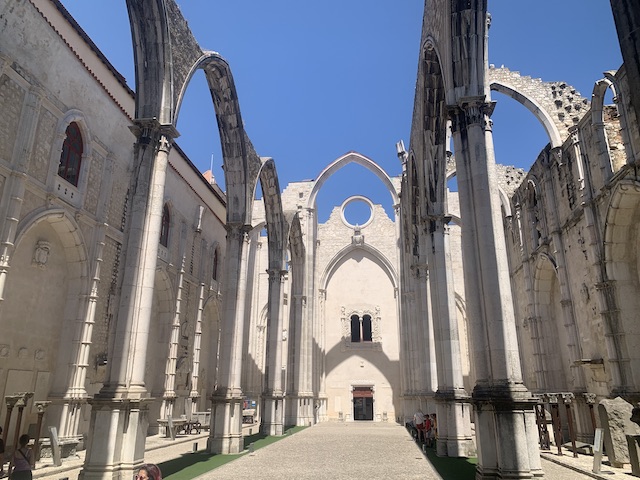
A must see in Lisbon: Carmo Archeological Museum

All the area around Baixa Chaido in Lisbon is maybe the zone with the most transit of tourists in the beautiful Portuguese capital, and a short stroll away from the Baixa Chiado metro stop you can find the beautiful Carmo Archeological Museum.

The museum is placed itself in the ruins of the Convent of Our Lady of Mount Carmel, and its entrance is spectacular when you just face the ruins of the Church of Our Lady of Mount Carmel, that was partially destroyed in the famous 1755 Lisbon earthquake, and makes the scenery even more breathtaking than when you visit a normal church, as the whole roof is gone, so you feel like stepping in a kind of fantasy book building.

The entrance sadly is not free and a normal adult ticket will cost you 7 euro. Not a rip off, but taking into account that the whole tour of visiting the semi destroyed church plus the Archeological Museum that is hosted in the adjacent area can be all completed in 25-30 minutes, feels a bit expensive, and probably a price of 4-5 euro would have made it more fair.

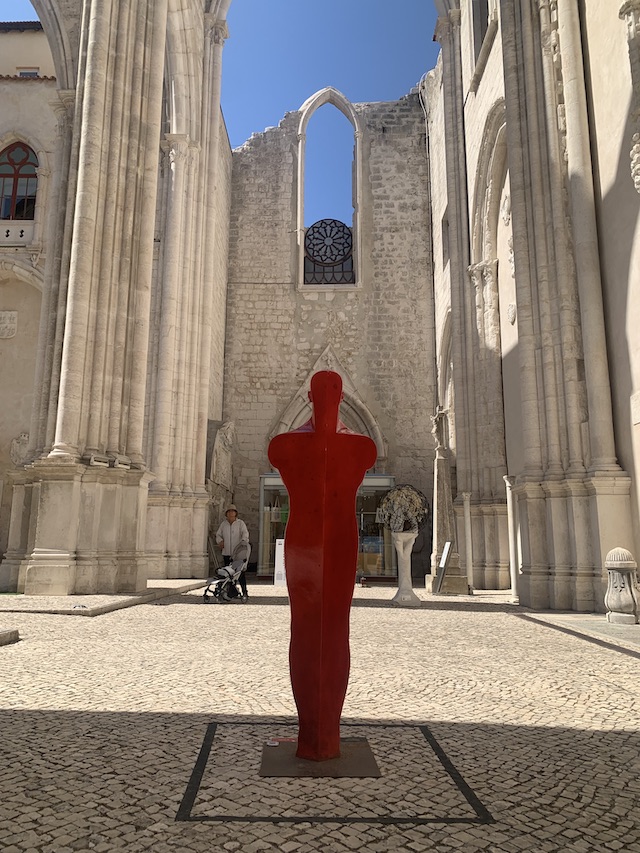
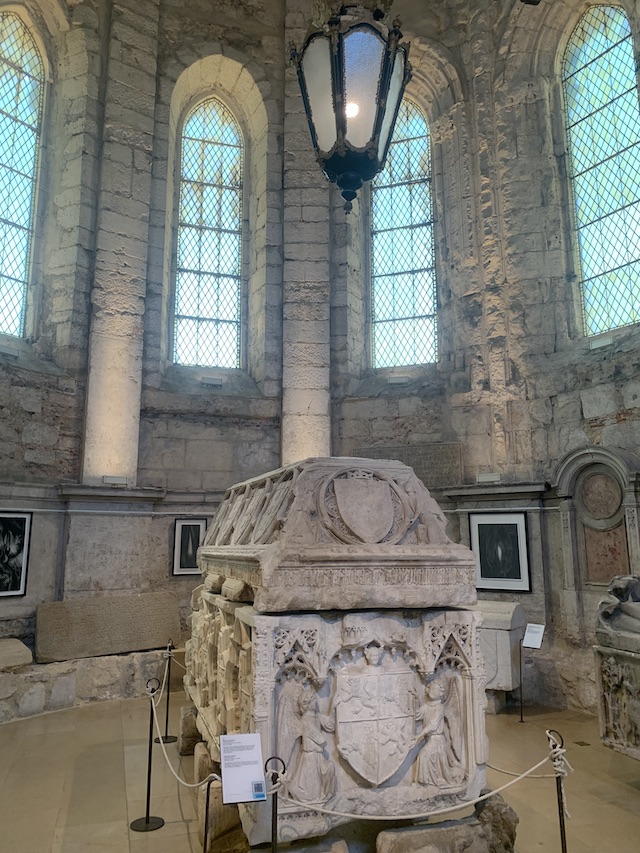
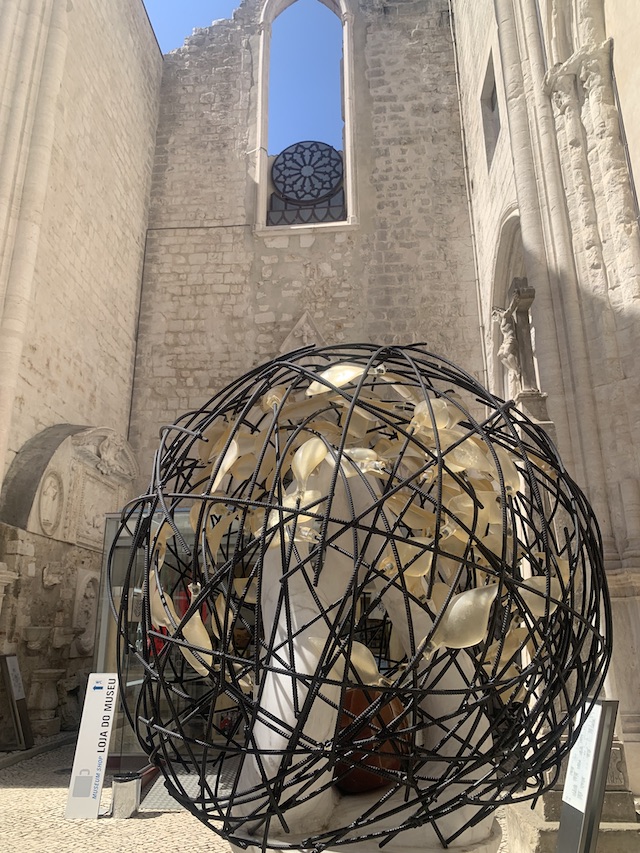
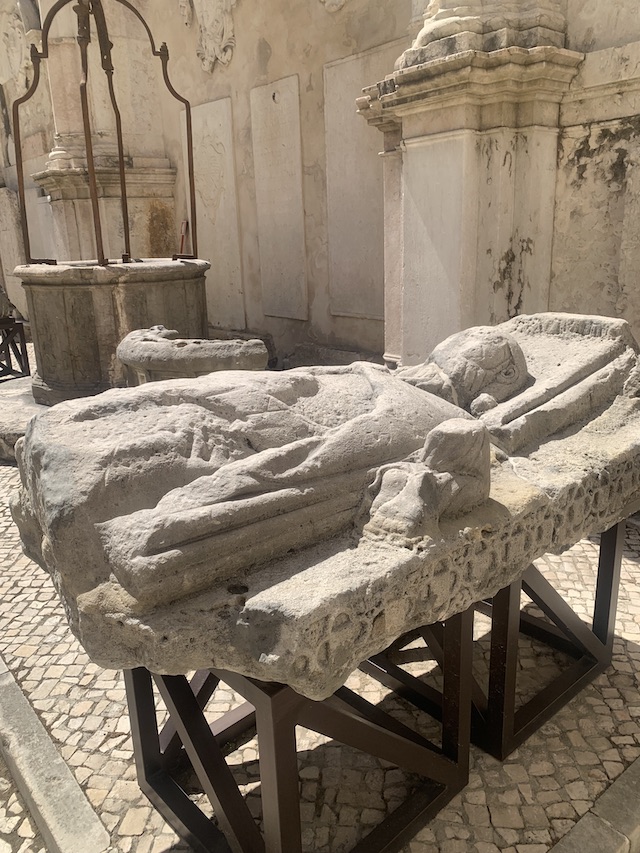
The archeological museum part of the visit counts with some interesting pieces and the special highlight might be the tomb of King Ferdinand I, who reigned between 1367-1383, but for most of the visitors the main highlight will be to take some pictures outdoors, where there is a very interesting mix of ancient art with some newer and more modern statues.

The place therefore is a must see if you have never been in Lisbon and this is your first visit, as you will probably end up walking near its location one day or another, and you also have some cosy terraces and restaurants in the sorroundings. But if you live in Lisbon or you already visited it once, most probably is place that you do not feel like spending 7 euro again to enter, if you already got your nice Instagram photos in the open-air church area there.

For other amazing places to visit in Lisbon, check:

A Hidden Gem in Lisbon: Lisbon City Museum – Palacio Pimenta

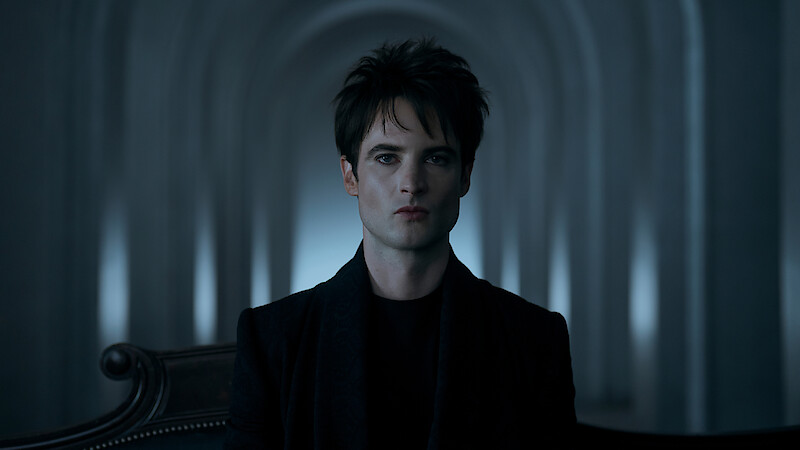
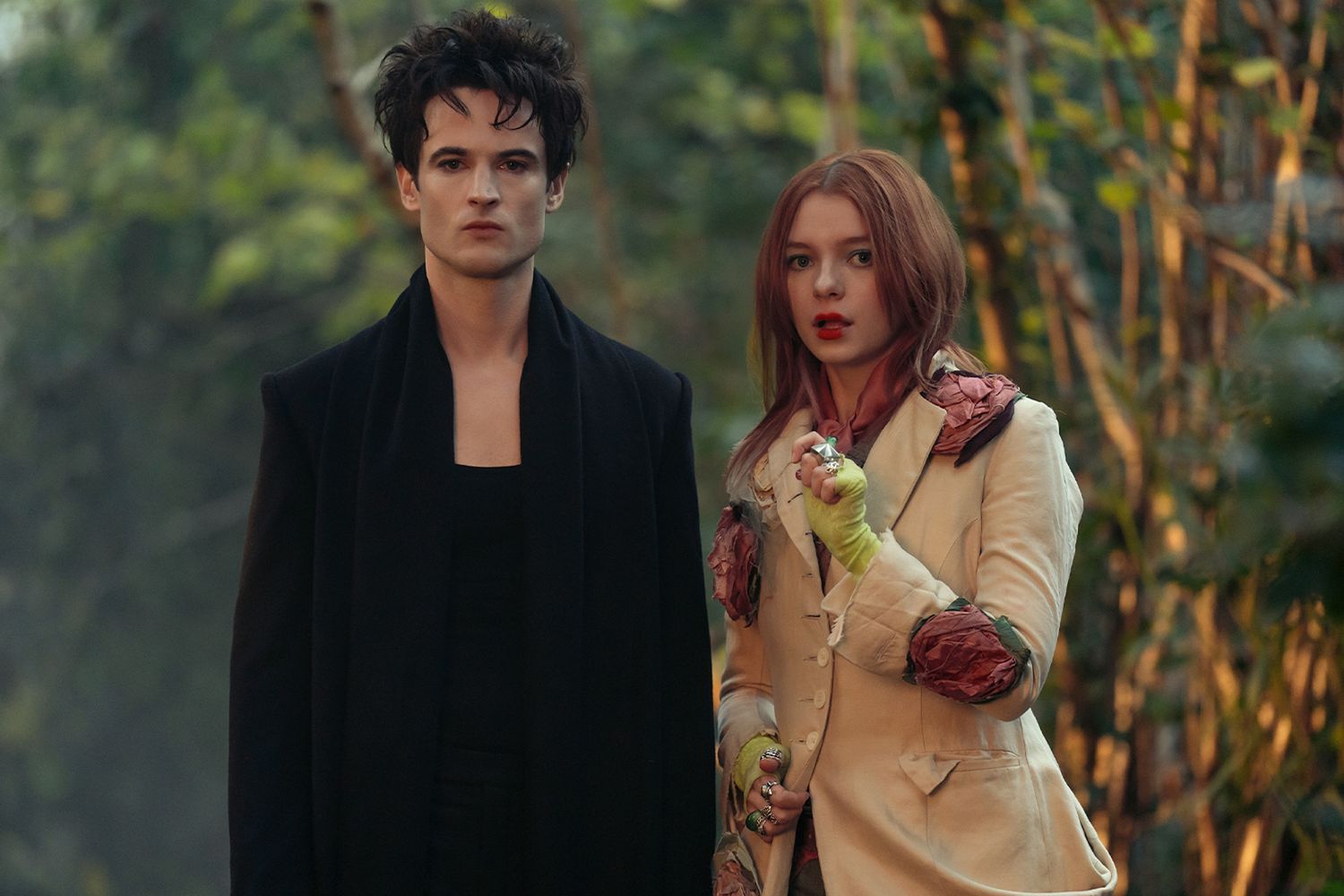
The Sandman S02 – How woke stupidity can utterly destroys a TV show

I have to start the article saying that I am a big fan of Neil Gaiman‘s books, although not particularly of The Sandman saga, but I have enjoyed many other of his works, and in fact, I did enjoy Season 1 of the Netflix TV show The Sandman, even when already the modern trend of having to have a hyper super mega multiracial cast, changing masculine roles to feminine, etc etc is the sad bread in most of the last years productions. It is like if Dream himself has placed any rational man in an endless nightmare of bullshit.

Still, I had just finished watching the amazing “Resident Alien” show on the same platform (its Season 1 is superb, in Season 2 of course they needed to add the feminist woke topics to spoil it…) and I thought it was a good moment to watch the new Season of the Sandman
Oh boy, where to start? Basically Dream character is portrayed all over the season as a manipulative and control freak man by any female character he interacts with, and spends half of the show having to say sorry and show attrition for being a macho asshole. That could be the resume of Season 02 and I would not be exaggerating…

The show does not lack of scenes where The Dream of Endless is emasculated without mercy. Most talks with her sister Death are pointing to him having to change and fix his mistakes (of course is a black sister with a white brother, they are coming from the same family as the Targaryen, it seems). One of those huge mistakes is to have done nothing to save a previous lover, Nada, who has spent 10.000 years in hell. Except that the lady Nada freely chose to go to hell to face her own purgatory instead of staying with Dream…

If you fast forward in the story, Dream, facing dangers, is able to save the ex lover Nada, to come up with a scene where he just says sorry to her like a million times for a choice she did, and he is blamed over and over again for her own choice. Not only that, but she will approach him and slap him too… Would the scene in reverse be allowed? Of course not in a million years, but a woman not wanting to face the responsibilities and consequences of her own decisions, blaming her ex lover and executing physical violence on him was totally fine for the producers and screenwriters…

And the season goes along those lines episode after episode. Dream is also kind and the only character with enough patience to try to help his younger sister Delirium, a classic pixie maniac girl that would not be able to find her way in London underground to any station, and the character still ends up mad at him. Not only, when the sister realizes that in theory Dream is not alive anymore, she just walks nonchalantly home with her recovered pet not giving absolutely a fuck that her brother just died… A fantastic example of empathy, commiseration and love… Once again, men are disposable. She looked very much emotionally affected when a trans car chauffeur she knew for hardly 1 day was killed.

It must be that I am very blind, because although Dream is far from a charity angel in the series and punishes opponents, he usually does so only rightfully when they have tried to harm him or attack him first. Even when he spends most of the time trying to undo injustices, sacrificing his own life or safety for others, trying to be fair, protecting his guests and the inhabitants of his kingdom, etc, he just gets in return hate and recrimination by almost any female character that crosses his way. His death threat of course comes from the 3 female Furies manipulating another woman to go and destroy him and his realm but a kidnapping of a child that he never executed… It does totally feel like an ex wife getting fired up by a team of female feminist lawyers trying to suck all the assets and the child from his naive hard working ex husband after a divorce.

I hope at some point that screenwriters can come back to do sensible scripts and we can enjoy good stories where the maim aim is not only to portray every male character like a criminal against female population. Meanwhile, up to you if you want to enjoy this endless brainwashing.

A hidden gem in Lisbon: Museo Nacional dos Coches

Belem is one of the most visited areas of vibrant Lisbon and there I headed on a sunny Sunday to visit the maybe biggest cultural attraction of the city: The Monasterio de los Jeronimos.

However as a newbie in the Portuguese capital, I was not aware of the insane queues to access the building (the cathedral part seems to have free entrance) and I tried to find the tickets stands to buy a ticket for the other areas. It was impossible, I could not find any ticket stand open around so I guess I will have to purchase online and visit in the future when the amount of tourists lower down a bit.

I still wanted to make the most out of my Sunday, and as Belem does not lack of other interesting and beautiful sights to explore, I headed to the Museo Nacional dos Coches.

Now, mind not to being confused with the content of such a museum, as it is not about classic or sports cars. You will not see Ferraris, BMWs or racing tuned Porche there. The museum is dedicated to old historical royal carriages in Portugal (though due to its interlinked history with Spain, you will also be able to see a bunch that belonged to the Spanish royal family) and actually the museum per se is divided into 2 buildings, one that is very close by the Presidential Palace Residence and that used to be the old royal stables, which I found more beautiful and charming, although it contains less pieces of exhibition that its adjacent more modern brother, that is situated in a modern building across the street.

The combined ticket to visit both buildings costs 15 euro, and although it is not supremely expensive, I think a price of around 8-10 euro could be more fair.

In the first old stables building you will be mesmerized by the beautiful decoration in the cellar. The place is not very crowded and you can roam quite easily on the ground floor contemplating beautiful carriages, or climb the ladder up to the second floor to admire some paintings and an overhead view. The visit will not take long, but it is a very charming and photogenic place.

Once you are done with that first building, across the street you can visit the second part of the museum, where the displays are taken care in a more modern and sophisticated way, and you can see not only amazingly beautiful carved carriages that belonged to kings, queens and ambassadors, but also some other peculiar carriages that differ in styles like the Berlinesas, or jail and post services carriages, and even a couple of very beautiful vintage engine cars that were the first ones used in Portugal.

If you are a fan of history and old automotive items, you might enjoy this museum very much and the entrance is totally worthy for both places. Besides, you will be able to see some other historical items like weapons or uniforms worn by the conductors centuries ago. And even if you are not a lover of old carriages, the buildings still make up for some fantastic social media and memories photos.

Wanna discover other hidden gems in Lisbon? Explore:

https://www.freemagazine.fi/a-hidden-gem-in-lisbon-lisbon-city-museum-palacio-pimenta/

A Hidden Gem in Lisbon: Lisbon City Museum – Palacio Pimenta

Lisbon, the Portuguese capital, is one of the most vibrant cities in Europe to visit, due to its culinary and cultural offer, good weather, beauty of its streets and good plane connections with an airport that is located very near the city centre.

Among its cultural offer, we bring you today a cosy small museum that although might be not in the top 5 of the most visited ones, it is totally worthy to pass by if you spend a few days in the city or you are a newly arrived citizen, as it is my case.

The Lisbon City Museum is very easy to reach from the central areas just by a pleasant walk, or if you take the Metro Yellow Line and stop in Campo Grande, as it is located in a beautiful historic palace (Palacio Pimenta) built in the XVIII Century just around 250 meters away from the metro station.

Its normal ticket fee is quite affordable, 3 euro, and they have discounts for journalists, students, etc. The staff also seemed pretty friendly and they explained you the building tour when you purchase your ticket.

The palace/museum goes through the history of the city along 2 floors, where you can see different artifacts, drawings, pottery and miniatures from prehistoric or Roman period to more modern times, which teaches you a bit more about the history of Lisbon and the history of Portugal.

I found the section with the Roman antiques pretty nice as I love Roman/Greek history, and of course the museum does not lack of a lovely display of Portuguese pottery, as the city has gained historical fame for the production of wonderful ceramics.

But nevertheless, maybe the highlight of the place is not inside its walls, but in the lovely adjacent garden, an oasis of peace in the city where you can enjoy a nice drink or a bit of food, as counts with a lovely kiosk, surrounded by beautiful and colorful peacocks that roam freely all over the grounds and will come peacefully close to you searching for some food.

It is a beautiful place to escape the traffic and stress of some more crowded touristic areas of Lisbon and enjoy a good conversation over a coffee in its garden, apart from learning a bit about the history of Lisbon. As the museum is not very big, you will not feel very tired losing focus visiting it, and the entrance ticket is pretty fair for what is offered. Being so easily connected by transportation, you have no excuse to give it a try!

For more information about the Lisbon City Museums Network:
https://museudelisboa.pt/en/

Silent Tourism’s Irony: Quiet Spots Draw Crowds

The Allure of Quiet Spots

In our noisy world, quiet spots have become increasingly attractive. Rising noise pollution contributes to health issues like sleep disturbances and high blood pressure, sparking a demand for serene environments. The uptick in searches for ‘quiet places’ reveals a societal yearning for tranquility away from the daily din. Quiet Parks International (QPI), founded by Gordon Hempton and Vikram Chauhan, serves as a beacon for those seeking silence. QPI offers an interactive map guiding travelers to urban, wilderness, and marine parks globally, raising awareness about preserving natural soundscapes for humans and wildlife alike.

Silent travel is gaining traction, encouraging tourists to visit destinations emphasizing tranquility and mindfulness. This travel form offers a chance to unwind, enhancing mental and physical well-being by connecting deeply with nature. Activities like stargazing, wild swimming, and forest bathing highlight the appeal of these tranquil locales. Quiet tourism aligns with the rise of wellness retreats and practices like yoga and meditation. Amplified by social media, these practices offer moments of empowerment, attracting those seeking stress relief and well-being.

Impact of Growing Popularity

Silent tourism, initially lauded for tranquil escapes, now faces the irony of its popularity leading to overtourism. Increased visitors disrupt the silence and peace these destinations offer, turning tranquility into chaos. The environmental impact is significant: natural landscapes suffer from litter, trail erosion, and marine pollution. Tourist influx strains local resources, leading to infrastructure challenges, affecting both preservationists and local communities.

Socially, silent tourism alters local cultures, leading to commercialization and gentrification. The influx dilutes local traditions, making it difficult to preserve heritage. Sustainable tourism models advocate for equitable benefit-sharing and community involvement, aligning heritage preservation with local values. The shift from quiet retreats to bustling hubs can change local attitudes towards tourists.

Overtourism in silent spots exposes tourists and locals to risks, as seen in places like Halong Bay, where safety lapses lead to environmental issues and accidents. The focus on profit over preservation results in irresponsible practices endangering life and habitats. The irony lies in silent tourism’s transformation into the phenomenon it sought to escape, highlighting the need for thoughtful management and sustainable practices.

The Role of Social Media

Social media has reshaped travel, transforming quiet spots into bustling destinations. Platforms like Instagram and TikTok allow travelers to share experiences, turning hidden gems into must-visit locations. Influencers play a key role, inspiring followers to visit serene destinations, contributing to overtourism as viral posts draw crowds without considering ecological impacts.

Social media influences travel experiences, with user-generated content providing authentic insights. Every traveler becomes a potential brand ambassador, democratizing travel inspiration. While this presents challenges, it also offers opportunities, bringing economic benefits to local communities by highlighting lesser-known areas. The challenge is balancing becoming an Instagram-worthy location with sustainable travel experiences.

Balancing Tourism and Preservation

Preserving quiet destinations requires a balance between tourism and protection. Silent tourism’s allure can attract crowds, risking degradation. The impact on local culture and environment becomes evident, with commercialization threatening traditions. Sustainable tourism models focus on equitable benefit-sharing and community involvement, aligning preservation with local values.

Community-based tourism (CBT) offers solutions, managing visitor numbers and preserving heritage. Ensuring economic benefits remain local promotes a sustainable model, mitigating excessive tourism effects. Involving communities and stakeholders in decision-making fosters education and awareness, respecting traditions and natural richness.

Embracing slow and quiet travel can preserve destinations. Longer stays in fewer places emphasize cultural connections, aligning with quiet travel ethos. Influencers and platforms promoting sustainable practices ensure silent tourism doesn’t compromise serene spots’ integrity.

Case Studies

Addressing overtourism challenges, a report featured 18 case studies from global cities. These studies guide cities balancing resident and visitor needs, with insights from stakeholders through interviews. The National Park Foundation received a $100 million grant to combat overtourism, implementing reservation systems in popular parks to limit visitors.

These case studies reveal challenges like overcrowding, misconduct, and environmental burdens. Increased noise disturbs local tranquility. Examining global examples provides insights into balancing tourism with cultural and environmental preservation.

Future of Silent Tourism

Technological Integration

Technology, despite its irony, plays a role in silent tourism. Platforms like SmartGuide provide AI-generated recommendations aligning with slow tourism, respecting the environment and communities. This evolution allows deeper exploration without disturbing tranquility.

In this realm, tools like the International Drivers Association make global travel more accessible by providing international driving permits, ensuring tourists can explore remote and tranquil destinations with confidence and ease.

Environmental and Community Benefits

Silent tourism benefits extend to the environment and communities. Longer stays reduce carbon footprints and noise pollution, fostering appreciation for nature and conservation efforts. Travelers contribute economically while engaging in meaningful cultural exchanges.

Overcoming Challenges

Despite benefits, silent tourism faces overtourism risks. Destination management organizations may promote shoulder season travel and lesser-known attractions to distribute traffic evenly and preserve peace.

The Role of Social Media

Social media’s impact on tourism, including silent tourism, is significant. While it can draw crowds, platforms can promote sustainable practices and lesser-known spots. Responsible sharing and storytelling ensure silent tourism spots remain peaceful.

For more information, visit the original source at: International Drivers Association 

Perfect Days: the best movie of the last decade?

You know the drill, Sunday evening at home, feeling lazy and overwhelmed with the idea that Monday is around the corner. You choose some movie that have never heard of before in Netflix and that happened to be “Perfect Days” by director Wim Wenders.

After watching it, I cannot stop talking about it. The movie is just wonderful, depicting the “monotonous” life of a mature public toilets cleaner in Tokyo, Hirayama (Kōji Yakusho, who is also superb in the Japanese series Rikuoh which I also strongly recommend).

Nothing much seems to happen in the life of Hirayama, who puts a great effort in the simple tasks of his everyday life, but at the same time a lot of happens even when he speaks very little through the movie. There are unsolved layers there about his past and his relation with his family, but in any case the movie does not focus on past dramas or non reciprocated love or any other tragedy, it just flows with the thrill of enjoying the little good things in life like the early morning coffee from the vending machine, the good music from some old cassette, or the beautiful reflection of the lights in between the trees in a park.

In a period of time where society is struggling with a lack of satisfaction, a continuous search for the next dopamine shot and when people always want to have more and more, this movie is refreshing. Not only for the beautiful depiction of Tokyo, an amazing city that can also alienate people easily, but reminding us that sometimes the joy of life is in the small details that make us smile everyday.

Perfect Days might not be the cup of tea for every viewer, and probably there will be many that can feel bored with it after 20 minutes, but if you enjoy a slow pace quality movie that is degustated like an onion, layer after layer, you will find this film amazing. So far, the best movie I have watched in a very long time.