The pick and the stick

{mosimage}


Foreigner gave an excellent show, although I thought that they could
have chosen a better repertoire, taking into account that it was their first
visit to
Estonia. In any case, every time I go to a
rock concert and wander around the first rows, the idea of catching a guitar
pick crosses my mind. It must be my collector’s side, but I find these small
rewards almost as good as interviewing bands face to face. I was surprised
about the huge amount of young girls in the first rows; I was kind of expecting
older heavy metal guys in leather jackets, but that made easier the movements
to reach the precious pick. To catch a guitar pick in a concert is a bit of an
art: you have to analyze the situation and the artists´atittudes. There are the
kinds of musicians who throw one hundred guitar picks in every show (like Malmsteem or the members of Whitesnake). In that case, the strategy
is just to reach first rows, be alert, and soon or later a pick will be in your
hand. But there is nothing so rewarding like getting one pick where only a few
chosen ones can have the good luck. That was the case with Foreigner. I waited
until the end of the show, gazed at the roadie giving a handful of 3-4 picks to
the guitar player located in front of me, advanced using my elbows a bit in
front of him…and Bingo! The pick is mine! A taste of rock glory in my pocket!

Later, it was the turn of Alice Cooper. I seem to be doomed when it is
about Alice Cooper’s concerts. 3 years ago I missed them in
Tampere when I already had bought my
ticket, and this time I could see only half of the show, since we had to catch
a bus at night. The point is that there I am, in fourth or fifth row, preparing
my girlfriend’s camera to take an excellent picture, concentrated that no arms
are in the middle between Alice and me…and, bang! I noticed something hitting my
head. He had thrown his stick directly to the zone where I was, and I did not
notice. So no picture and no stick… It must be that burnt witches do not like
much to be captured in photographies. Behind me, a total war was taking place,
with people fighting, pushing, almost punching, beers flying around… so it
was totally impossible to take the stick. Well, fortunately no big damage in my
forehead, but I had the glory so close…

It was time to leave, and all in all, 2 excellent rock shows and one
more guitar pick to add to my small but cosy collection. If you have the chance
to go and see Foreigner next Thursday in
Helsinki, just go ahead!

Finlandia Prize 2007 to Hannu Väisänen

Hannu Väisänen, who was born in Oulu, currently lives in France. Besides as an author, he works as a graphic artist and colourist painter. In November Väisänen was also awarded the State Prize for art (Taiteen valtionpalkinto) worth 15,000 euros.

Finlandia Junior
Last Thursday (29.11) the Finlandia Junior award for children's and youth literature was presented to Aino Havukainen (38) and Sami Toivonen (36) for their illustrated book Tatun ja Patun Suomi (literally 'Tatu's and Patu's Finland'). The book tells about the brothers Tatu and Patu from Outola (a place for strangers), where everything is different than in Finland. Together they discover what kind of country Finland is. The book has also been translated in Swedish (Det här är Finland) and English (This is Finland).

Related:

Shortlist for this year's Finlandia Prize announced

Nominations for Finlandia Junior award announced

New Finlandia prize for comics


Interview with Hannu Väisänen
– Books from Finland
Extract from Toiset Kengät ('The Other Shoes') in English – Books from Finland

Art by Hannu Väisänen – Galerie Anhava, Helsinki

Christmas Calendar with a.o. excerpts from Tatu and Patu – This is Finland – Kidzone Finland


Finlandia Prize
– Wikipedia

The fishy tales of Saaremaa, Muhu and Abruka

A peculiar, near eccentric choice of holiday destination, are three of the islands off Estonia’s western coast for a week or so. What do they have that the rest of this little country that acts as a museum for all of their conquerors and misrulers don’t? Nothing really – just much of the same with less crowds, crush and clamour. To make it crystal clear: if you’re looking for action of the loud, resort sort, close your eyes and throw a dart at the Mediterranean.

Occupying 6.5% of the country’s land area and home to 35,000, Saaremaa and its picture book capital Kuressaare are mainly a trip back in time, but with the present-day thrown in to make sure creature comforts are on tap – unless you really want to get away from all of that too.
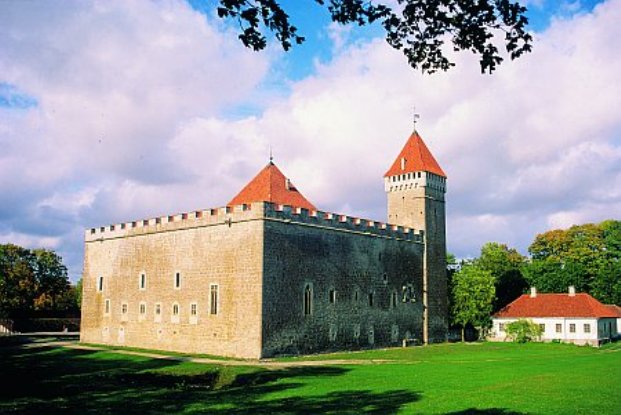
Saaremaa

Over the centuries, the islands have seen more changes of ‘ownership’ than the country itself. Germans, Danes, Swedes and Russians have been ‘in charge’ since 1227 when the Teutonic Knights finally suppressed rugged local resistance. Even Estonians have ruled here briefly. Between 1919-1940 and after 1991, the blue, white and black tricolour has flown from flagpoles.

History is very visible as all left their mark (or stain) on the architecture, society and cuisine. The Archbishop’s Castle in Arensburg, as Kuressaare was called until 1919, is the only untouched fortress left on the Baltic coast. So far away from pre-20th Century geo-political issues that it was never even attacked, never mind damaged. Until 1559, the West-Saare Bishopric’s seat was firmly placed here before the splendidly named Bishop Munchenhausen sold it to Denmark’s King Fredrik II.

It’s a must-see, such pristine obelisks are a global-scale rarity. This small solid 15th century edifice contains leftovers, exhibitions and the obligatory legend of a Catholic monk walled in after ‘dishonouring’ a local maiden. Despite this, his tomb is called ‘the cellar of the immured knight’. In one wing is an interesting museum to the alternating Nazi and Soviet occupations showing how invaders take liberties with local residents rights who were unlucky to be in a possibly strategic, but attractive place.

An example of this callousness is the statue and monument to those killed in the Estonian War of Independence (1918-1920) now to be seen on Kuressaare’s main street, the original was destroyed during Stalin’s period – Uncle Joe wasn’t so avuncular towards free spirits. But at least the Nazis and Soviet had a major battle at Tehumardi when the latter’s forces finally expelled the fascists from Estonia with over 1,000 casualties on both sides after 5 hours of close combat. For Estonians, victory by either side was still a defeat.

Kuressaare’s attractions are few: a couple of churches, the 17th Century town hall and a weighing house, a 100-year old Dutch windmill which is now a bar plus other watering holes, cafés, restaurants and hotels. Most are at their best in the summer sun. And it doesn’t take too long to see it all on foot. Kuressaare now markets itself mainly as a spa town with treatments for the aged and their ailments. Nice hotels tend to be occupied by stiff limbs and aching bodies, the sheer wear and tear of time. Their habit of wandering around silently in bathrobes gives the impression of a hospital or heaven’s waiting room, not an R&R place. But the ones that have a pool have an advantage.

Outside town there is Sõrve lighthouse (52m), piles of stones erected by passers-by at Tagaranna, a row of 5 windmills at Angla (4 apparently are local style that can be swivelled around to face the wind, the other a static, boring Dutch type), the meteorite crater at Kaali (which means cabbage, a name contrived by Estonian peasants after the German nobleman von Gahlen who owned the local manor until 1729), the Pangla cliff – and  that’s about it.

Saaremaa’s attractions are its sheer simplicity, quietness and slow pace. If you like hunting, there’s game aplenty to shoot: wild boar, wolf, beaver, elk, deer, ducks and other fowl, which also find their way into the local cuisine and hence onto your dinner plate. Ditto for fishing folk. Some antique shops have pretty good collections of yesteryear and Kuressaare market usually has yummy honey, berries and mushrooms, depending on the season. The island is well known for its dairy produce: local smoked cheese, dark bread and butter being a tasty combination and souvenir.
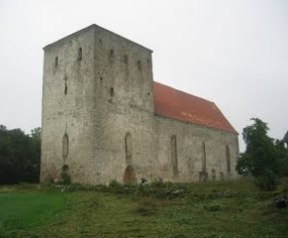
Muhu

Muhu is called an island, but is joined to nearby Saaremaa by an old dyke that acts as an umbilical chord to its bigger sister, and is the link to the mainland via Kuivastu harbour. Ferries run almost continuously in high season. Here you may be shown a herring-bone panelled door, brightly painted, and be told you will see these all over the two islands – only not to see another! These islanders like to tell stories and are infamous for it.

A famous Muhu spot is Padäste Manor, a luxury boutique hotel rightly famous for its style and dining – and one of the Thompson Twins stayed there once upon a time, if you remember that trio. Liiva in the island’s centre is a cute little village with a church, antique-and-handicraft shop and a good eatery in the former dairy. Koguva village on the west coast is a combination open museum and working village farm. Birth and final resting place of Estonia’s famous writer, diehard communist Juhan Smuul, who drank himself to death there after failing with a hat-trick of wives. An English-speaking guide, who looks like the archetypical Estonian, will point out his statue, which has a story in itself, of course.

Lastly there is Abruka. The logic of going there is difficult to put a finger on. I was told that tourists go to get away from it all. They must be very satisfied at fulfilling their aim so exquisitely. A small boat runs a cheap subsidised service from Roomassaare harbour, not far from Kurressaare. There you can be met by the owner of the then only ‘accommodation’ on this pimple in the sea (30 residents), in a smelly, bouncy, old Soviet army lorry to be taken to his campsite.

He has an inexhaustible store of stories, luckily only in Estonian. So if you do understand some, my advice is to not tell him, otherwise the short journey will take even longer as he will stop every 50 metres to revive some folklore to you. The rude little huts in his garden barely count as shelter: gaps between the roof and walls do not look capable of keeping out rain, cold and the summer clouds of mosquitoes.

What you don’t take with you must be bought from the camp ‘shop’, facilities are okay but not en suite. However, it’s ridiculously cheap (outside Tallinn generally is), which may be its only attraction. It appears he never throws anything away either. So for auto enthusiasts, there are vehicles that you may never see, or have seen, again. But the piles of empty plastic buckets of preservatives and tyres and other rubbish are just an eyesore.
Abruka

The good news is that a hostel was built last summer and will be open for business in 2008 with the island’s only bar, airtight accommodation and a shop of sorts. This competition may blow away the aforementioned host without the most, but if you really want to get away from everything, no.

nsurprisingly, walking is the most popular pastime with the local graveyard (containing victims of resistance to and Soviet repression plus the Estonia sinking), the hill where residents were gathered for deportation by Stalin, a beach and the world’s smallest public library on the itinerary.

So why Saaremaa, Muhu and Abruka? For what they haven’t got, not for what they have. The simple life can be the good life. And they must have the world’s best collection of aromatic juniper forests, from which culinary tools are assiduously carved. Plus the home-made prize-winning beer at Kaali (Saaremaa has a beer-making competition every year), Pilnla is unique. Disappointingly, the beer bearing the name Saaremaa is actually brewed in Tartu in south-east Estonia.
The town council of Kuressaare has even invested in a golf course that opens in 2008 with foreign tourists specifically targeted. Golfers may be less than impressed to find out it’s built on a former refuse heap, but the green fees will be at the lower end of the scale.

But why go all the way to a place off the beaten track, if not to walk that path? The hunting lodges and campsites are comfortable, cheap and friendly with the ‘saun’ ubiquitous and obligatory. So do what the locals do, take it slowly, sweat it out, take a cold beer and vodka, watch the sun go down – or come up! 

Recommended places:
Hotel Arensburg, Kuressaarre, Saaremaa (www.arensburg.ee)
Jurna Hunting Lodge (www.saaremaa.ee/jurna)
Liiva Restoran, Liiva, Muhu
Kaali Tavern (www.kaalitrahter.ee)   

Near-record price for Finnish masterpiece at auction

Only two works by artist Helene Schjerfbeck (1862 – 1946) have fetched higher bids at auctions in Finland.

Järnefelt, one of Finland’s most prominent painters, painted Pyykkiranta in 1889 in the town of Keuruu. It depicts washerwomen by a lakeside. [photo]

The work was bought on Saturday by businessman and art collector Anders Wiklöf. It will be part of the extensive art collection at his summer residence Andersudde, south of Mariehamn, the capital of Finland's autonomous island region of Åland.

Wiklöf’s art collection, which contains some of the best Finnish and Swedish art from the turn of the 19th and 20th centuries, is currently on display at the Amos Andersson Art Museum in Helsinki.

Photo of Pyykkiranta by Eero Järnefelt (Hagelstam)

Eero Järnefelt – Wikipedia
Artworks by Eero Järnefelt – Finnish National Gallery

Hagelstam Fine Art Auctioneers

Helene Schjerfbeck, a modernist observer of life – Virtual Finland
Artworks by Helene Schjerfbeck – Finnish National Gallery

The Boss IS coming to Helsinki

Bruce Springsteen has only been in Finland once before. In 2003 he played two sold out gigs at the same stadium in the capital in front of a record combined audience of 89,856, breaking the Finnish record of 87,000 set by Michael Jackson in 1997.

Bruce Springsteen is only one of the international mega stars that have recently been confirmed to play in Finland next year. Other recently announced big names include Iron Maiden, Bon Jovi, Kylie Minogue, the Smashing Pumpkins and Angie Stone.

Also popular Swedish rock band Kent will return to Finland, this time for a mini-tour of four gigs. After their sold-out concert at Kulttuuritalo in Helsinki last September, the group will now only perform outside the Finnish capital region at the end of January and the beginning of February: in Lahti (30.1), Tampere (31.1), Vaasa (1.2) and Oulu (2.2). Warming up for Kent will be Swedish electro band Familjen.

For more details on these and other concerts by foreign artists in Finland, check FREE!’s Coming to Finland list >>

Related:
Album review: Magic – Bruce Springsteen


Bruce Springsteen: official site | MySpace

Kent: official site | MySpace
Familjen: official site | MySpace

From the remote island

{mosimage}Iceland: a country of no more than three hundred thousand inhabitants that live in an island with amazingly beautiful landscapes. A nation that was able to achieve independence from Denmark without any bloodshed, and that counts with and excellent sports tradition; as an example their handball national team has played and achieved awards and medals at the highest international level.

In the music scene, Iceland is not only about Björk. Other artists like Valgeir Sigurðsson or Mum are showing that this island is not isolated at all, and it can give birth to a very modern sound. Not mentioning the band featured in the present article: Sigur Rós (that means literally “Rose of Victory” in Icelandic. One of the most beautiful names that you can hear from a rock band nowadays, don’t you think…?).

The taste for poetry, minimalism and an aesthetically balance goes far beyond the name of the band. Sigur Rós pays great attention to every one of their melodies, but at the same time are able to use a carefully studied sloppy approach. For example, in the year 2002 they released a work whose title says everything (and almost nothing); the album in question was called “( )”, with all the tracks untitled and sung in an invented language that takes as reference their native Icelandic. The intention was that every person listening to the music could give their own interpretation to the feelings provoked. So if you do not master Icelandic language, do not worry, because what Sigur Rós wanted to achieve is to aim directly at your heart and feelings.

The band has gone through different changes in their formation. It was founded in 1994, and nowadays is formed by Jón "Jónsi" Birgisson in the vocals and guitar, Kjartan "Kjarri" Sveinsson in the keyboards, Orri Páll Dýrason as the drummer and bass player Georg "Goggi" Holm.

For those of you who are already fans, there is not much left to discover about their talent. For the others believing that they don’t know anything about Sigur Rós, it can maybe ring a bell if you listen to their famous and delightful melody Starálful, or if you are followers of the German band Rammstein, that used their homonymous composition Sigur Rós for opening the gigs during their Reise Reise tour. You can check out that in the DVD released by the Germans Völkerball.

The band also collaborated in the soundtrack of Vanilla Sky, the Hollywood adaptation of the Spanish film Abre los Ojos. It seems that they members of the band were not satisfied at all with the experience of scoring music for a mainstream film, and got pretty annoyed with the experience of working with super star Tom Cruise and director Cameron Crowe.The style of Sigur Rós can be found closer to others like Radiohead. It is not by chance that both bands made collaboration together in 2003 for composing music for a dance called Split Sides. The Icelandic collaborated with three songs called Ba Ba, Ti Ki and Di Do. Those titles look like extracted directly from Marinetti´s head!

But most important thing is that Sigur Rós are totally alive and ready to rock in this end of 2007! Their fans can be happy, since they have released a double album called Hvarf-Heim with plenty of unreleased material and new acoustic versions of old songs. Added to this, they offer the nice surprise of releasing a documentary called Heima: a beautiful portrait of their native country with an amazing photography that shows accurately the breath taking beauty of the landscapes. All that naturally spiced up with the music of Sigur Rós. If you like experimental rock in combination with landscapes that look extracted from a marvelous dream, you cannot miss it! Sigur Rós have found the most effective therapy against the darkness of the winter: outstanding releases that can help to understand not only their music, but also the culture and nature of Iceland.


Heima
will be screened in Tallinn, Estonia as part of the Tallinn Black Nights film festival on the 2nd and 8th of December.
Festival's site: www.poff.ee

www.sigur-ros.co.uk

The cigarette of Anna Abreu

The evening was promising at the
beginning. Lots of free drinks and food and a warm reception at the pub close
to the venue. But organization turned into a chaos due to the tight schedule
and I was really afraid that I would leave the place without my desired
interview. We were move in a rush to the zone close to the dressing rooms. Artists
were coming from the backstage for a short photo session and back to the
restricted area. There I could see Jenni
Vartiainen
(who was looking astonishing and taller than I imagined)
together with Tidjan, the male
member of Kwan, and some other
popular people like Antti Tuisku (who
was looking shorter than I imagined) or the guys from The Giant Leap. Tarja
Turunen was a prey for the photographers, very elegant in a Marimekko black
dress, while I was not able to contact the person from her record company. The
interview seemed lost, so we went to take a look at the rehearsals. And there
was the little Anna Abreu: splendid
and sensual, with a vitality that should not surprise since she is only 17.

Being half Portuguese, it was clear that she could understand some Spanish, and
there we went with a surrealistic conversation where four different languages
were mixed in 5 minutes. As she explained, no time for after party for our
young lady; she had to come back home early after her performance to study for
an exam. But she still had time to break the rules and smoke a cigarette inside
Jäähälli under the passive supervision of the security man before the crowd
started to arrive to enjoy the show. Anna Abreu gave us good luck, since just
when we came back inside we got a short but fruitful interview with a very
friendly Tarja Turunen. The show had good and bad moments, and Anna and Tarja
were undoubtedly the most awaited ones by the audience. Time to go, and there
on the floor of Jäähälli lies the cigarette that Anna Abreu smoked some minutes
before. Even the tight rules in
Finland get a bit more flexible with the
charming personality of this little volcano. There will be always some
privileged ones. Our dear Anna shone on and off stage like a little flame
coming from a languid cigarette breaking the cold darkness of an empty sport
hall.


There goes the family

{mosimage}Last summer the directors of programming at the Finnish Broadcasting Company (YLE) needed a soap opera to fill the hours of the summer afternoons. They chose a Spanish series featuring a loud speaking and eccentric, yet traditional, family. Surprisingly, Los Serrano (Serranon perhe) became so popular that in autumn, YLE needed to rebroadcast the series from episode 1 and to reschedule it to the more convenient weekend afternoons.


In Spain, the first season of Los Serrano was first produced and broadcast in 2003. Soon it become one of the most successful Spanish TV series ever. The second season, the one currently broadcasted in Finland, reached an average audience of seven million viewers and an audience share of 38% in evening prime time.

The series follows the successful and original formula that Spanish TV series developed in the mid 1990s. This formula goes beyond the tradition one-hour episode. They are usually 75 minutes long allowing much room for commercials and covering the main programming slot in the evenings. The theme is not exactly drama or comedy, but a balance between both that differentiates the Spanish series from the American productions. The popularity of these series is based on its portrayal of middle class characters and families. The viewers can feel very close to the situations and stories told in the plot.


Médico de Familia
(Perhelääkäri) was the first big hit of this genre and it was the first Spanish series to be broadcast in Finland. Daniel Écija, the producer of Médico de Familia, is also the man behind Los Serrano. This time there are no doctors, but school teachers and tavern owners involved. The Serrano family is formed by Diego Serrano, owner of a typical Spanish tavern with his grumpy brother. Diego is married to a school teacher called Lucía Gómez. Together they formed a big family with three sons and two daughters from a previous marriage. To make a long story short, the series is about  the common problems and not so common adventures of the family and their friends and relatives at home, school and at the tavern. As it should be, there's love: flirting, humor and also some touching moments. 

The popularity of the series in Finland is quite surprising. It seems too Spanish for a Finn. First of all, the language is complicated. Characters are very expressive, they speak loud and they curse a lot. A team of eight translators is in charge of writing the subtitles for YLE. They have a lot of work. It takes one week for a translator to translate one episode. The heavy use of slang does not make the job easy. Every episode is a window to the less glamorous, but friendly, Spanish way of living.

The leading role of Diego Serrano is played by popular actor Antonio Resines. Born in 1954, he has a long experience in cinema and television, especially in comedy parts. But the series has also been a tool for promoting new talents. When the series started young actor Fran Perea, who plays the old brother Marcos Serrano, became an idol for teenagers. Also his musical career was built around the main theme of the series that he sang. For some time he topped the charts, but at the moment he is more focused on his career as an actor and has participated in several feature films, including Antonio Banderas' El camino de los ingleses (2006). In any case, every other episode there is an opportunity for Perea showing him playing a song with his acoustic guitar.

In Spain, the last episode of the sixth season of Los Serrano was shown. The series has reached more than 120 episodes and in January there will be a new season. There have been many and surprising changes in the plot, but Finnish audience still needs to wait what happens to this peculiar family. Meanwhile, to avoid unpleasant spoilers we recommend not to google Los Serrano.


Los Serrano – Serranon perhe

Weekends at 14.45 YLE

Fran Perea is visiting Helsinki this week. He will be signing autographs at the Anttila Megastore in Kamppi: 27.11 at 18:00

Happy Birthday, Suomi!

{mosimage}It's Finland's birthday! Today the country celebrates its declaration of independence from the Russian empire. It has not been an easy way down the road since 1917. One civil war, a war against the Soviet Union during World War II and a severe economical crisis at the beginning of the nineties before joining European Union have been the major obstacles in 90 years of sovereignty of the Republic of Finland. The recently released DVD Itsenäinen Suomi describes the most important events along this long road.

Nowadays Finland is a healthy country that enjoys an established welfare state system, ranks at the top of technology development and also at the top of the lists about education among youngsters. But how did it all begin? That's what Itsenäinen Suomi (Independent Finland) tells. By the way, don't be scare if you don't speak a word of Finnish, the dvd has English subtitles to reach a wider audience.

The documentary begins with a birth. At the same time as the parliament declares the independence of Finland, a baby is born in a house in the woods of Finland. She's Aino and her life, the life of an average working class Finn in the 20th century, will be told while history is being made for Finland.

Aino tells about the Civil War, about Paavo Nurmi and the mighty Finnish long distance runners who won so many medals at the Olympics, the "Lotta" nurses during the Second World War, the reconstruction of the country, the alcohol prohibition, the beggining of the electronics industry, the relations with the Soviet Union and the leftish opinions of the students in the sixties.

But this is not Forrest Gump. No fiction here. The film is based on archival footage. For a foreigner it will be very thrilling to see the White Army march through the streets of Helsinki or to see President Kekkonen  establishing good relations with the Soviet Union or the old cable factory in Ruoholahti or lots of rubber boots being made by Nokia. All the typical Finnish symbols can be seen.

Itsenäinen Suomi
was written by Antti Tuuri. It as a light tale, though. There are no deep political analyses or historical findings. But it is a nice introduction to the recent history of Finland. In spite of not being marketed for foreigners and tourist, this documentary would be appealing to those who cannot easily find images about Finland and its story. For Finns, it might not bring anything new, just a recognition of well known images and story from History class.

More money to film production than producers demanded

The rest of the extra funds for the film industry will go to, among other things, the digitalization of small countryside cinemas and films for children.

In the previous proposal there was no extra money allocated to support domestically produced films, despite earlier suggestions by Wallin.

The over 10 million euros extra to directly benefit cultural, youth work and sports activities were freed up from the National Lottery profits. In the earlier proposal much of that money was reserved to partly cover rental expenses, paying off loans of cultural bodies and renovations (including the renovation of the National Theatre).

Funds to cover those real estate expenses will now have to be found elsewhere.

The Parliament will likely vote on the proposal on Friday.

Related:

Finnish film producers in protest: no new films

Film producers end the strike


Bitchin’ all over Europe

{mosimage}The Donnas may not be the correct daughters that every papa
dreams about, but surely they would be excellent partners for some wild
fiesta! They are at these moments touring around Europe with their new
album Bitchin’, and dedicated some time to answer the questions that
FREE! Magazine shot at them.


Power to the girls! Lately our website seems to have been overwhelmed with female rock bands (a dream comes true!!!). From the young new Finnish talents of Stalingrad Cowgirls or Pintandwefall, to the raw power of the British McQueen or the older generation still able to attract a big mass of fans in Sweden Rock like the American Vixen. But if we would have to talk about an American female rock band that is able nowadays to remove the foundations of the venues where they play, that would be undoubtedly The Donnas. We were lucky to contact the girls from Palo Alto while being on tour, and Allison (guitar player) and Brett (vocals) kindly openly chated about everything related to their past and present.

Was it difficult during your first years to study at high school and play at the same time? Could you have a normal attitude in the classrooms just after touring Japan, or the rock and roll lifestyle affects?

(Allison) No, we mostly focused on school the whole time we were in high school, we practiced a lot after school and played shows here and there, but mostly just high school shows with other bands from the school. We didn’t go on a full on tour until after high school, and our first trip overseas as a band was to Japan near the end of our final year, so at that point we were pretty much nearing the final days of school anyway!


How is the present tour going? Do you have time and energy to party between the gigs?

(Brett) The American leg of the Feather Nation tour was amazing and so fun and so far the European leg is proving to live up to the first half. We love the bands we’re touring with so that gives us something to look forward to watching every day, and the audiences are great so we look forward to playing too! Having a bus is the best because we have time to see some sights for once and have some great food and even… shop!

It seems like one of you had a not very nice incident with the police, because of drinking whiskey in the street, in Canada during your last American tour. Can you tell us a bit more about it?

(Allison) Yeah, our bass player was drinking on the bus and ran outside to sign something for a fan, unfortunately not realizing that it’s illegal to have alcohol on thestreets in Canada (and the US as well). The police rolled up and she resisted which enraged the officer, but luckily our smooth talking friend was able to get her out of trouble nicely!

In November, you were visiting some Scandinavian countries, but not Finland. Why? Didn´t anybody show interest in booking a gig?

(Brett) We actually LOVE Finland but there is a lot that goes into booking a tour besides where you’d like to play. The length of the tour, money, and the route the bus takes and whether the opening band can keep up in a van are all factors that a booking agent and tour manager has to consider.

I saw you a couple of years ago playing in Provinssirock here in Finland. Do you remember that concert? As far as I remembered, the feeling with the audience was great.

(Allison) Yes, it wasn’t so long ago! I enjoyed the show, it was rocking and sweaty!

There is a young Finnish female rock band called Stalingrad Cowgirls that is getting quite a big success lately. Have you heard anything about them?

(Brett) That’s a little off my radar, but I’d be interested to check them out! Maybe we could come and play in Finland with them!

{mosimage}Male rock bands usually have a lot of female "groupies" around. How is it among your fans, the Donnaholics, are there many male fans following you? Is there any special anecdote you can tell about this, male underwear thrown onto the stage or something like that?

(Allison) Haha yes, we do get male underwear thrown up on stage sometimes, boxers and briefs galore, even female underwear and bras! In Belgium and Germany we had two different flashers jumping onstage, and just recently in North Carolina a boy jumped onstage and started unzipping his pants. Our guitar tech clobbered him!

How does it feel that you can play Take it off in the Guitar Hero videogame? Have any of you played the videogame?

(Brett) It’s surreal! It’s really fun to play along and look at the characters and hear the funny fake track!

Tell us about your new album, Bitchin’. In what way is it different (or similar) to previous ones? Do you feel  different from that teenager band that was rehearsing in a garage a decade ago?

(Allison) The funny thing is that this album is like a return to that feeling of being teenagers in our garage, because we had all the time in the world to work on it, just like back then. Once we graduated and signed onto Lookout! records and then Atlantic, we were just touring, recording, touring, non stop—no time for anything in between. Now is the first time we could just chill out with our ideas and bat them around like we used to when we were kids, and it greatly affected the outcome! It is much more fun because of that extra thought we put into it and we had a killer time making it!

Do you consider the 4 of you friends on and off the stage?

(Brett) We’re definitely friends first before we’re a band, that’s how we started and that’s always what’s most important. I feel sad for bands that aren’t really friends off stage, what do they do for the other 23 hours of the day? How do they handle sharing hotel rooms and sitting next to each other for 11 hours straight on international flights? How do they write fun songs with inside jokes that make them laugh every night? It seems like a bad life to me, but hey, I guess that’s not my problem! And I’m thankful for that!

Why that title:  Bitchin´? Do you consider yourselves to have sometimes a "bad girl’s attitude"?

(Allison) Well we of course called it "bitchin’" cos that means "awesome" or "radical" and it’s very Californian. I think we prefer "bad ass attitude" to "bad girl’s attitude"!

Finnish festivals more popular in 2007

The festival drawing the largest amount of visitors this year was the Maritime Festival in Kotka. An estimated 300,000 people visited the Tall Ship Races and other events in the port town 130 km east of Helsinki.

The festival with the biggest number of paying visitors (almost 65,000) was the Helsinki Festival. With 264,376 visitors in total, it was the second biggest Finnish festival overall in 2007.

TOP 10 BIGGEST FESTIVALS* – OVERALL

 1. Kotka Maritime Festival – 300 000 visitors
 2. Helsinki Festival – 264 376
 3. Pori Jazz – 153 000
 4. Kaustinen Folk Music Festival – 121 000
 5. Tampere Theatre Festival – 76 000
 6. World Village Festival, Helsinki – 70 000
 7. Puistoblues, Järvenpää – 70 000
 8. Savonlinna Opera Festival – 68 753
 9. Provinssirock, Seinäjoki – 55 000
10. Imatra Big Band Festival – 52 000

*) Includes only festivals that are members of Finland Festivals
(Source: Finland Festivals)

TOP 10 FESTIVALS* – PAYING VISITORS

 1. Helsinki Festival – 64 845 paying visitors
 2. Savonlinna Opera Festival – 58 555
 3. Pori Jazz – 58 000
 4. Kaustinen Folk Music Festival – 41 000
 5. Kuhmo Chamber Music Festival – 32 436
 6. Orivesi Summer Festivals – 26 741
 7. Art Centre Salmela, Mäntyharju – 26 000
 8. Tampere Theatre Festival – 26 000
 9. Provinssirock, Seinäjoki – 21 500
10. Kotka Maritime Festival – 20 000

*) Includes only festivals that are members of Finland Festivals
(Source: Finland Festivals)

The statistics given above are only based on the amounts of visitors of member festivals of Finland Festivals. Big events like the Tango Festival in Seinäjoki (104,390 visitors in 2007), the Raumanmeri Midsummer Festival (about 90,000) and Ruisrock in Turku (65,000) are not included.

Finland Festivals

Tango Festival, Seinäjoki

Raumanmeri Midsummer Festival

Ruisrock