Under the Thai sun!

Are you tired of waiting for spring to begin?

The earliest months of the year in Finland are the coldest ones and the social life is much quieter than in the summer. That’s a given, but did you know that in Thailand the warm season is turning into a hot one in March? So, why don’t you have a break from the cold and head to sunny Thailand?
Take a preview of the sun this year!

Thailand is perfect for everyone: for backpackers, beach bums, families and hippies with flowers in their hair, as well as for burned-out business people, who just want to forget the real world filled with stock exchange prices and all that. Spend a week, or months, exploring vivid Thai culture. You won’t get bored in Thailand: just chill out on the beach, check out the glorious temples, do some scuba diving or trekking. And whatever you decide to do, it won’t be too expensive!

Bangkok


Thrilling Thailand

There are plenty of things to do if you like outdoor activities. For trekking there are good places near to Chiang Maj, in northern Thailand. As a part of the trip you can also do some river rafting and if you don’t feel like hiking, there is always some friendly elephant who would like to carry you! For
those interested in climbing, Railey beach is the place to be.

Do you remember how it feels to walk barefoot on the beach? There are countless numbers of beaches to do that in Thailand: crowded ones and quiet ones. You just have to pick your favourite beach. Mine is Ko Phi Phi Leh, which is a deserted beach: no houses, just sand and palm trees! The island is also known from the movie called “The Beach”.

When the sun sets and kids go to bed, the beaches turn into big party zones. The most popular travellers’ beach party, the Full Moon Party, is arranged on Koh Phangan island. The party is so famous that I suggest you book your accommodation in advance unless you want to sleep on the beach (but
in case you do, you won't be the only one!). But don’t worry if the moon is not
full while you are in Thailand, because the restless travellers party pretty much every night!

If diving is your thing or you have always wanted to try it, there are several great places to do that, like Koh Tao, the Similan islands, Phi Phi and Koh Chang. You can see a lot of colourful life under the surface: sharks, turtles and even massive manta rays! Imagine this: you are diving and suddenly it gets dark. You think that it is an unexpected eclipse of the sun. You look up and what you see is a big school of these friendly giants, manta rays, swimming on top of and all around you. It looks like they are flying. It is a sight that will take your breath away.

After the deep blue, it's back to dry land and noisy Bangkok, the capital of Thailand. The
shining temples all over the country are amazing and there are lot of them in Bangkok. A few worthy of mention: Grand Palace and Wat Phra Kaeo, where you can find the most revered Buddha image in the country. In addition to sightseeing, take time to explore those smaller side lanes. Who knows, you may even see a glimpse of the everyday life of the locals!

From Buddhism to materialism: shopping in the capital of Thailand is a dizzy experience. Three letters: MBK. If you say this word to the taxi driver, he will take you to the MBK mall and you don’t have any worries how to spend the rest of the day. The mall is not small at all! I spent two days there
and covered only small part of it. The infinite amount of the stuff that is on sale is overwhelming! I have to warn you though – they have a big problem with piracy in Asia, so it is up to your own judgement
what you buy.

Thai food

There are lot of food markets around Bangkok where the food is very cheap and fresh, but if you want to see something different, go to the floating market. It is a nice day trip outside of Bangkok and you can buy sweet and fresh fruits and souvenirs from the boats.


Thai transportation

Thailand is a paradise on earth, but a bit far away from Scandinavia. You will need at least a few weeks off, a passport and open mind. Basically before leaving Finland you only need to buy the flight tickets, starting from 700 euros. You can get a room when you get there. I paid around 3 to 5 euros a night, sharing the room
with my friend. Of course, the luxury room costs much more, as always. Eating out is cheap too and Thai food is amazingly good!

It is easy to get around in the cities: you can take taxi, bus or tuk tuk (the traditional vehicle which is like a mix of a motorcycle and a cart.). Some tuk tuk drivers may sometimes be a little bit
cheeky, so negotiate about the price before you step into the vehicle. You can also rent a scooter, but please be careful: the traffic on that side of the globe is not as safe as here. Been there, done that: I had a motorcycle accident in Thailand. Luckily I survived! So, the safest solution is to take a bus or a train. The connections between the cities are well organized. But do remember that it is not Finland; vehicles may not be on time, buses may break down and weird things happen when you least expect them to, but after all, that is part of the adventure!

After the holiday you will reminisce about those lazy days chatting with locals on the streets, the taste of fresh pineapple in your mouth and those sunsets you watched while lying in a hammock on the beach. And even a short trip to Thailand will make you happy for a long time!

Thailand is such a lovely and lively place, that one article is just scratching the surface. Thus I say: Go there, discover it and you will fall for it!

Meet Mr. Finland – the czar’s swedish-speaking spy

Baron Mannerheim is the man without whom Finland might have wasted decades
as part of the Soviet Union. He is the only
man ever to be named Field Marshal of Finland, but then, the Republic has known
no other Commander-in-Chief in times of war. In fact, Mannerheim’s bio reads
like a crash course in Finnish independence. He was there for it all. He led the
government troops to victory in the Civil War, united the nation in two wars
against the Soviet Union, and finally expelled
the German army from Finland
at the end of the Second World War. And saving Finland was something Mannerheim
only took up after retiring from the Russian Army at the age of 50.


Mannerheim: the controversial national
hero
Over the years, Mannerheim has inspired awe in many Finns and foreigners. One
of his ardent fans is Matthew Kirk, the former British Ambassador to Finland
(2002-2006). Now Vodafone’s director of external relations, Mr. Kirk still has
fond memories of the time he lived just down the road from Mannerheim’s house
in Kaivopuisto.

  
“One of my favourite things about Mannerheim actually
is the fact that he never owned his house, but rented it from the confectioner,
Karl Fazer, whose signature still appears on the famous Fazer Blue chocolates”,
Mr. Kirk says. Mannerheim's signature can be seen in many public buildings throughout
Finland,
but the only document on which these two most famous signatures appear is the
lease for the house in Kaivopuisto. The house, which was transformed into
a museum after Mannerheim’s death, still gives a very vivid impression of this
extraordinary man.

  
The many parallels between Mannerheim and Churchill
also fascinate Mr Kirk. Both were born into great houses, both were badly
behaved at school, and dropped out. Both travelled widely, and had military careers.
In the run up to the Second World War, both argued for rearmament against the
wishes of the political majority in their countries. Both smoked, and enjoyed a
drink or two.
 
An officer in the Imperial Army
Born in June 1867 at Louhisaari Manor, near Turku, Mannerheim was the second son
of a moneyed, Swedish-speaking noble family. (The family actually spoke a
different language every day of the week: Swedish, English, French, Russian,
German, and Portuguese. And yes, even Finnish.) While Mannerheim’s mother was a
devout Christian, a dutiful and loyal person, the Count passed on to his son an
appreciation of the good life, a love of beautiful women, good food, and the
fine arts. Indeed the Count was declared bankrupt and, taking his mistress with
him, fled to Paris
before Gustaf turned 15. The family home was sold, and the mother died of a
heart attack.
  
At the time Finland
was still a part of the Russian Empire, even if an autonomous Grand Duchy. It
was not exceptional for young men to seek their fortune outside their native
land, and in 1887 the impoverished young Mannerheim enrolled in the Nikolayevskaya Cavalry School
in St. Petersburg.
This was the start of what was to be 30 eventful years of loyally serving the
Emperor in the Imperial Army. Mannerheim was an ambitious man, but fortunately
he also turned out to be gifted, effective, and absolutely just as a military
leader. He demanded the impossible from everyone, including himself.
  
Maintaining a lifestyle suitable for a Cavalry Officer in Guard's cavalry was expensive.
In 1892 Mannerheim came into a great deal of money by way marrying a wealthy
Russian heiress. This, however, proved only a temporary solution, since after a
few unexpectedly happy years Baroness Mannerheim emigrated permanently to Paris with the couple’s
two daughters. This left Mannerheim free to pursue his career unobstructed, but
sadly out of funds. Already in 1911 he complained to a friend about his
financial situation: “I am forced to lead a very moderate life. All my money
goes to horses and beautiful women. There is nothing left for trifles!”

  
A great traveller

Being a soldier and a lover were not the only things
that defined Mannerheim. Among other things he was also a masterful rider, an
adventurous explorer, an accomplished photographer, and a skilful diplomat.
These at least were the qualities required of him on the two-year reconnoitring
(spying) expedition his Russian masters sent him on at the beginning of the
20th century.
  

Like many others, Mr. Kirk too is amazed by
Mannerheim’s journey. Under the cover of a Helsinki University
professor engaged in ethnological and biological research, Mannerheim travelled
from the Middle East to the eastern Chinese
coast during the years 1906-08. A fair-sized entourage accompanied him, but in
the end only two were there for the whole length (over 14,000 kilometers) of
the journey: Mannerheim and his horse. Mannerheim drew maps for 3,000
kilometers, took more than 1,350 photographs, obtained more than 1,200 objects,
prepared impressive statistics, and wrote detailed reports. Ironically, his
ethnographic studies are still of use today while the products of his spying
were soon buried in archives.
  

A man ahead of
his time

Mannerheim’s national importance to Finland is not
solely due to his role as the supreme wartime Commander-in-Chief. He was also a
political leader who twice assumed the role of Finland's Head of State. Straight
after the declaration of independence, Finland decided to become a
monarchy and invited a German prince to become king. In the interim, Mannerheim
became regent. The prince never came, and the Finns decided to become a republic.
Mannerheim became President of Finland during the war in 1944 in order to
secure peace with Russia.
As Mr. Kirk points out, Mannerheim was effectively both a royal and a republican.
He was a loyal servant of the Czar, advocated monarchy for Finland, and
ended up as the head up the Republic himself.
  
As a travelled cosmopolitan Mannerheim had a very broad field of vision, or the
rare gift of reconciling the national interests of a small, peripheral country
with those of the great powers. A man of many contrasts, paradoxes and
exceptional timings, Mannerheim was “cosmopolitan in a time of nationalism,
aristocrat in the era of democracy, and conservative in the age of
revolutions.”

The subversive scientist?

Scrooge McDuck or Uncle Scrooge may be a comic book
character, but (Nils) Adolf Erik Nordenskiöld (1832-1901) is a very real
historical figure. Born in Helsinki, on Bulevardi 5, Nordenskiöld spent his youth
and childhood at Frugård manor in Mäntsälä, where he developed an early interest
in the natural sciences. Already as a child Nordenskiöld accompanied his father
Nils, the chief superintendent of the Finnish mining board, on various
mineralogical expeditions around the country. The boy's formal schooling began
at 13 with a false start, but two years later he was already at the top of his
class. In 1855, six years after entering the Imperial Alexander University of
Helsinki, Nordenskiöld had already defended a doctoral dissertation, published
several other scientific publications, and accompanied his father on a
scientific trip to the Urals.


{mosimage}A man of principles, or, banqueting
will do that to you

In November 1855 Nordenskiöld and a group of friends
from the University arranged a banquet to celebrate their birthdays and name
days. There was live music, singing, and a great deal of drinking and
merriment. Many speeches and toasts were made, some parodying the great
eastern, some the western powers. The party ended on the streets of Helsinki
with some of the guests singing the Marseillaise in Swedish.

Much to the misfortune of the revellers, these were
the years of the Crimean War (1852-56), and the resident Russian Governor-General
of Finland, the count Fredrick von Berg, was in no way predisposed to opening
space for public political dissent. In fact, Nordenskiöld and his friends had
already evoked Berg’s wrath by exposing one of the university students as his
spy.

The new incident gave von Berg the excuse he needed to
take his revenge. The speeches and the Marseillaise were construed as
subversive political acts, and von Berg had the University expel or detain the
involved students. Some of those punished left Finland for good. Nordenskiöld,
suddenly stripped of his academic positions, travelled to Berlin for further
study, but returned the next summer.

The following spring Nordenskiöld took part in a
formal degree ceremony of the faculty, and had the degrees of master and doctor
conferred on him. Two days later he was invited to make a farewell speech to
the Swedish guests. Nordenskiöld's chosen subject was the future of Finland, and
he spiced up the speech with phrases such as “the indomitable consciousness of
our right to freedom”. The audience responded with rapturous joy, but not
everyone was pleased. The Governor-General thought it near-treason, and gave
Nordenskiöld two options: to apologise, or to emigrate permanently. Nordenskiöld
chose exile, and never again returned to live in Finland.


Explorer of the Northeast Passage

Nordenskiöld settled in Sweden where he was soon offered
the chance to participate in an arctic expedition to Svalbard, an archipelago
lying in the Arctic Ocean. Between the years 1857 and 1883 Nordenskiöld
participated in and lead a total of ten scientific expeditions in the arctic
regions. He explored Svalbard, Greenland, and even attempted to reach the North
Pole, but it was the Northeast Passage that truly captured his imagination.

{mosimage}At the time all commercial shipping routes from Europe
to Asia or the west coast of North America circumnavigated either Africa or the
southernmost tip of South America. In theory however, the shortest maritime
route between Europe and East Asia was the Northeast passage, a passage from
northern Norway to the Pacific Ocean along the coast of Siberia and through the
Bering strait. Something like this had been mapped out already by Olaus Magnus
in his 1539 Carta marina map. But no-one had ever succeeded in sailing
through the route. Was it inevitable that all attempts should fail? Would the
passage always be blocked by ice, or could the arctic weather permit the
journey? Nordenskiöld was convinced that it could be done, and set out to prove
it.

In 1877 Nordenskiöld had secured the necessary funds,
and started planning and preparing for the voyage. For the expedition’s ship he
bought the Vega, a whaler with a powerful steam engine, and gathered her
a crew of experienced volunteers. The captain of the Vega was to be
Louis Palander, a Swedish naval lieutenant. Indeed, had it not been for Palander
and his exceptional navigational skills, the expedition might never have
succeeded, since Nordenskiöld himself was no arctic sailor. He was constantly
sea-sick, and according to contemporaries “no one has ever dreaded ice as much
as Nordenskiöld did”.

But Nordenskiöld had mastered the skill of preparing
well, and when the Vega weighed anchor on the 21th of July
1878, it had everything needed to weather an arctic winter or two. That is, if
the Bering strait froze over before they could pass through, the ship would
have enough coal, and the people enough warm clothes, food, and entertainment.

The journey started auspiciously enough with the
numerous scientists and officers aboard the Vega all carrying out their
specific measurements or research tasks. Hardly anything from the sea currents
to petrified prehistoric plants and local tribes escaped their attention.
Longitudes were measured, maps drawn, and everything was going according to plan.
But on the 28th of September, when the Vega was only two days
away from the Bering strait, the ocean froze around her. Had the expedition arrived
on the spot only a few hours earlier, it could have sailed through the entire
length of the passage in two months.

As it was, the Vega and her people were stuck
in Kolyuchin Bay for ten months of arctic winter. Thanks to Nordenskiöld’s
planning, however, the time was spent in relative comfort. While the
temperature outside eventually dropped to -46°C, inside the ship’s cabins it
was always at least +12°C. The scientists carried on with their research, and the crew’s
inevitable boredom was alleviated with a celebration on every possible
occasion. It turned out that the only thing Nordenskiöld had forgotten was a
Christmas tree, and even that could be rigged up from twigs and driftwood.

On 18th July 1879 summer finally reached the Vega in
the form of a break-up of the surrounding ice. Soon they were through the
Bering strait, and on their way home. Nordenskiöld had proved the Northeast
passage could be safely sailed through. The expedition’s success was a global
sensation, and the Vega was received with festivities in every harbour
it put into. From a first stop in Port Clarence (Alaska) the expedition
continued on to Japan, where even the emperor was curious to meet Nordenskiöld.
Hong Kong, China, Borneo, and Ceylon followed, and then, on the other side of
the Indian Ocean, Yemen, the Suez canal, the Mediterranean, and Naples. Twenty-one
months after the beginning of the expedition the Vega finally arrived to
a jubilant Stockholm on the 24th of April 1880. Nordenskiöld’s
voyage around the continent of Eurasia was complete.


Founder of the History of
Cartography

In the end the discovery of the Northeast passage did
not immediately reroute much commercial traffic, but it did provide excellent
fuel for the popular imagination. The true age of explorations was coming to an
end, but the fascination, the romance still lingered. After all, this was the
time when Jules Verne published his Voyages extraordinaires, and the two
books Nordenskiöld wrote about his journey were soon published in 11 languages.

With his royalties Nordenskiöld built up an extensive scientific
library of geographical history. He took a particular interest in early
cartographical literature, and in works describing voyages of exploration. Especially
the discovery of the New World fascinated him, and Nordenskiöld actually did go
to the Chicago Universal Exposition to promote his book "First maps of
America". It was a fitting occasion since the Exposition, also known as
the Columbian Exhibition, commemorated the 400th anniversary of
Columbus' journey to America.

Nordenskiöld had become a Swedish citizen, held the
post of Superintendent of the mineralogical department in the Swedish Royal
Museum from the age of 26 unto his death, and made all his great expeditions under
the Swedish flag. He had been created a baron, appointed a member of the
Swedish Academy, and received a place in the Swedish Diet, but in his heart he
always remained a Finn. After all, it was here, at Louhisaari manor, that he
had married the baroness Anna Maria Mannerheim, the aunt of another Finnish
hero. While during his lifetime Nordenskiöld had made his collection available
to other scholars by publishing a Facsimile-atlas of the most important maps, at
his death he wanted the collection, in its entirety, to be located in Finland.

Today The A.E. Nordenskiöld Collection, comprising
over 400 atlases and 24, 000 historical maps, is one of the greatest treasures
of the Helsinki University Library, and included in the UNESCO Memory of the
World Register.

Tales of love, sex and solitude

Surrounded
by old projectors and film star photos at the Motion Picture museum in
Helsinki, Aku Louhimies speaks calmly, even when discussing his latest movie Man Exposed (Rissuuttu Mies, 2006) that has been recently banned by the Court of
Appeal of Helsinki. He does not seem to give much importance to his awards, as
he is already working on his next film, which he describes as a “dark love
story during the Finnish Civil War”. This new movie sounds like a different and
challenging project for a director specializing in modern and urban stories. He
enjoys shooting the city and analyzing complicated human relations that are resolved
in an inevitable solitude.


How do you find stories worthy to be made into
a film?

I read a
great deal and I find a lot of different kinds of ideas and stories, but I also
have to think about the investors, about what kind of a movie they are looking
for.

How involved do you like to get in the writing
of the screenplay?

In general,
I hope the screenwriter will be in the process from the beginning until the
film is on the screen, since it’s a really important cooperation. I assume that
here in Europe we need to start to work together already from the beginning.
Usually in Finland it does not happen that there is a very good script already
finished and on my desk, so I think it is always a close cooperation.

{mosimage}There appears to be some recurrent topics in
your movies, such as the portrayal of the city in Kuutamolla (Lovers and Leavers) and Valkoinen Kaupunki (Frozen
City
).

In the
films I have made so far, the city has played a big part, but my next film is
not going to be set in a city; it depends upon the story. For example, for me Kuutamolla was a realistic way
of looking at Helsinki. I also think that Valkoinen Kaunpunki is a realistic way of examining a different part of the same city.
However, the people who select the films for the Berlin International Film
Festival said that Kuutamolla
didn’t look like Finland and there was not enough Finnishness. So, you never
know…

What were they expecting of Finland?

I’d guess
probably something sad, or maybe an Aki Kaurismäki type of film.

Sex is also a recurrent topic in your film. Is
there any message involved?

I don’t
think if there is only one clear message, but it’s a subject in which I have
been interested and I wish that we could show things differently, like in
mainstream Hollywood films when characters meet, kiss and then it fades into
next morning. In Riisuttu Mies (Man Exposed), there
is a scene in which the guys are coming out of sauna and start wrestling. There
is full frontal male nudity, but you cannot have that in the US. It would be
like an X-rated film, which I think is really funny. I want to express it in a
more natural way…I hope it is not that big a deal.

In both Restless
and Man Exposed one of the main
characters is a priest. Why is this?

When you
think about human relationships, the one with a priest is one of the most interesting.
We expect them to be better in a way, especially in a Protestant church with
women priests as well; this profession can get very interesting.

You also like focusing on the family.

When you
are a film director it’s not very easy to be a good husband and father at the
same time, but I try to combine both. Those are also subjects in which I’m
interested. Kids are interesting.

Is working with them so painful like some other
directors say?

No, I
really like working with kids. I also like working with animals. I have only
good experiences.

The character of the mother leaves home
in both Kuutamolla and in Valkoinen Kaupunki. Do you want to stress the
importance of the mother in the family?

In Kuutamolla, this situation was already in the book. It is a stereotype that
it’s the man’s departure that only destroys the family; the woman can leave
too. Valkoinen Kaupunki is told from the
point of view of the man for the audience to identify with his drama. It has to
do with the fact that when something goes wrong in the marriage, everybody
tends to point his finger – it is not always like that.

I noticed that another connection between those
movies is Martin Scorsese’s Taxi Driver
and loners.

Yeah,
that’s right. I like that film a lot. I like how it portrays loneliness and it
is a meaningful film for me. When I read Katja Kallio’s book, which had
references from lots of films, this part specially came to my mind. It also has
to do with the fact that film was distributed by Columbia, so we could have the
rights to show parts of Taxi Driver
in our movie. In Valkoinen Kaunpunki it’s a
bit different; it’s like a homage referring to loneliness. I can easily find
that loneliness has been one of the themes through all of my films – Iiris in Kuutamolla is also quite lonely,
in a way.

Do you think that is an influence of Finnish
society?

I think
that’s one of the things. It’s definitely cultural. This is a very different
country than, say, Spain. It’s different how people walk around the city and
how they interact with one another.

However, it has been said that your
movies don’t really reflect Finland and that they are not realistic.

For me,
they have been quite realistic. They are not showing the whole picture of
Finland. They show just one small part, but I think they are realistic. I
understand, though, that the {quotes}Helsinki of Valkoinen Kaupunki or Paha Maa is not the
city shown at the tourist information office.{/quotes}

Most people remember Levottomat (Restless) because of its sex scenes. Are you concerned that the
audience will remember one part of the story?

It is far
more interesting if movies have different layers and you can watch them several
times, going deeper into it with each viewing. It has to be the same way with
advertising. When Restless has gone
to international festivals people did not pay attention to sex or who the
actors were. They can access the story easier and find the theme of loneliness
than people in Finland, who know the actors and have seen the promotion. It
happens with other films in the same way, they have done well internationally,
but they didn’t find many viewers in Finland.

Does this fact annoy you?

No, not
really, because you cannot always please everybody and a filmmaker cannot keep
in mind the audience response all the time.

Do you think much about the audience when doing
the films?

Yes, in a
way, but also, in a way, not at all. When I’m preparing a scene, I’m thinking
about how they should be acting and how we can shoot this, and then I don’t
think about the audience.


A difficult
director?

Can you explain more about the troubles you had
with producer Markus Selin with the editing of Paha Maa?

It was a
matter of who has the final cut in European cinema. Traditionally in Finland,
the director has the right over the final cut. Films are not a bad business.
There is not a big risk for production companies, although they try to make it
look like that. Costs are paid with governmental institutions and the presale
of television rights. The problem was solved and the end result was fine, although
the problem received some publicity. I’m sure producer is happy now, because,
although it was not a mainstream film, it attracted a lot of viewers and it has
been distributed in the Scandinavian countries, in the Benelux and in the UK.
It has done well.


And now you have a problem with Riisuttu Mies.

It is quite
different because I’m not legally part of that argument at all. My contracts
are fine. The screenwriter Veli-Pekka Hänninen is an old friend of the producer
and their contracts have some strange things that don’t really fit in the
normal way of filmmaking. I have never seen them but it kind of says that the
screenwriter could have a final cut of the film. That might be if you are in
the United States and you are Stephen King or Michael Crichton. Maybe those
guys could have the final cut. If I had known that there was this kind of
arrangement, I would have not worked on Riisuttu Mies. I do commercials sometimes and I know how it works. You work as a
hired gun, but I would not do a feature film in Finland as a hired gun.
Everything is fine from my point of view besides the end result of the court.

You seem to be taking it very calmly.

I cannot
believe it is going to be the end result. It is ridiculous. If there has been
something wrong with the contract, I think it is good if the producer pays
something to the screenwriter; I don’t have anything against that, but since
the film was already made it is very dumb not to allow all the work of
cinematographers, editors, composers and actors, for example, to be seen. There
were several film festivals around the world that have been interested in the
film and now they don’t have the possibility of showing it. It was supposed to
be shown in Gothenburg. {quotes}Banning Riisuttu Mies is a very dumb decision.{/quotes} I don’t think it is going to be this
way in the end. 

What is it like working with actors?

I cannot
really say in general. I want them to give something I can believe and
something that I can feel emotionally or intellectually. Some people like
rehearsing, others hate it, but is it rehearsing when you go for a cup of
coffee? Why not? To me, it’s very important to get to know the people with
which I am working.

There’s no better example of this than
with your own wife Laura Malmivaara, who appears in several of your movies. Is
it stressful to mix work and family?

It helps in
the way that you will work with somebody you already know, so you can get to a
great level of confidence. Maybe sometimes it’s little bit more stressful, but
mainly it is a benefit.


Five movies

Let’s talk about your movies. Your first
one was Levottomat.

It took me
many years. It took around five years to get the financing for the film. It is
really hard to breakthrough in a small country like Finland where only about
ten feature films are made every year. It was an important story for me at that
time. It was hard to get the first one done.

{mosimage}Next came a bittersweet love story, Kuutamolla.

I read
Katja Kallio’s book and I thought that this would make a good movie, and then
the producer also thought it was a good idea. We met with Katja Kallio and we
thought that we could work together. I approached her and she approached me at
the same time in a way. It was a really nice cooperation.

Paha Maa was a hit and critically
acclaimed.

I already
had that script ready for almost 14 years before I was able to do it. I think
it was more experimental when it comes to the structure. It also felt important
to do.

Man Exposed brings back the figure of a priest.

There was
no script in the beginning and we developed as we worked. I wanted to do
something that would be lighter than Frozen
Land
and it is closer to Lovers and
Leavers
. The main character, played by Samuli Edelmann, is a priest whose
wife is also a priest and the story follows their marriage and not having kids.

The last is Valkoinen Kaupunki, a very tough story.

In a way it
is also really experimental. It is made with small cameras. It was also
personally important for me to be done.

Valkoinen Kaupunki and Paha Maa have very
similar titles in English, but not in Finnish. Why is that?

I think
‘Frozen Land’ is a good translation. It expresses the same ideas as in Finnish.
It is even better than in Finnish. However ‘Frozen City’ is a mistake because
it should have been ‘White City’. Perhaps production companies thought it would
work better to present it like a sequel to Paha Maa, which it is not. I think the audience is going to get confused and
think it is the same movie.


Photos by J.M. Rodríguez 

The seed is fertilized

{mosimage}Toni and Antti, in a telltale
sign of the band's do-it-yourself attitude, convinced Sipe to join them on
drums. It didn't exactly matter that Sipe had never actually played the drums
before. On the contrary, it fitted perfectly into the genuine punk attitude of
the lads. As did the name Apulanta – meaning "fertilizer."

The story goes that Toni came
up with the name while lounging on his then-girlfriends' sofa, and that other
possible name candidates included Napalm Killers, Silmaläsikäärme
("spectacled cobra") and Pökäle (roughly translated as "sturdy
piece of crap") – Apulanta was to be different, gritty, and as
down-to-earth as possible.

At and around the first few
gigs, the band auditioned numerous bass players, but the right one came along
only in the autumn of '92, when Sipe met Amanda (Mandy) Gaynor, an exchange
student from the US. Again, the fact that Mandy had never played the bass
before was no problem: what really mattered was her fondness of punk bands,
such as The Misfits, The Ramones and Bad Religion. The band was soon playing
gigs, not only in Heinola, but all over Southern Finland. Time was ripe for a
record deal.

In the fall of '93, Mandy
returned to the US. Her replacement was the band's longtime friend Tuukka
Temonen. Keeping with the tradition, he didn't have any previous experience of
playing the bass, but he caught up quickly. Tuukka was also interested in
movies and videos, and became the first video director for Apulanta.

In 1994, Apulanta supported
Californian punk band The Offspring, but the grandiosity of the events failed
to impress Antti. He would have pursued a heavier, more gothic, darker sound,
instead of the catchier, punkier tunes that were the traits of Toni's
songwriting. In the fall of the same year, Antti decided to quit the band.


…and they became famous

Initially it seemed that his
departure led to a lowpoint in the band's career, but in fact it merely marked
a new beginning. The band decided not to look for a replacement guitarist but
continue as a trio, and they recorded their first LP (Attack of the A.L. people) in the winter of 1994. The EP that
followed in 1995, under the name Hajonnut,
contained the song that would become their biggest hit to date: Mitä kuuluu ("What's up"). The
rest is Finnish punk rock history…

Apulanta breaking the law

We have an animated talk with Toni (vocals and guitar) and Sipe (drums) about their history and their new album that was released that same day.

Why the name Apulanta (fertilizer)?

Toni: When we formed the band we were very young. I was 13 and he was 15. We were punk rockers at that time and we just decided to choose the worst possible name for the band. I think we succeeded pretty well…

Sipe: What can you expect at that age…? The first point was that it had to be easy to remember and the second point was that it was funny.

Toni: There have been one or two occasions when we came to regret the decision; it is an ugly child, but it is our child!

How did you get to know each other?

Toni: We went to the same high school.

Sipe: And we were basically the school outcasts. When you are an outsider and you do not have friends, you seek out similar people. So, we met at a disco where we both were trying to get girls, but instead we met…

{mosimage}And you formed a band!

Toni: We both come from this small town called Heinola. At that time, in the early-90s, there was nothing going on there, no sub-cultures of any kind. We were the only guys at the high school who were wearing band t-shirts, as we were into heavy metal, trash metal and death metal at that time. It was kind of a “t-shirt” incident that led us to meet each other. I saw that there was one guy with almost the same kind of t-shirt that I was wearing, I said: “Hi, what is your name? Do you play anything? Why don’t we form a band?” So actually, that was simple.

It was like a Aki Kaurismäki dialogue…

Toni: Yeah it was.  A couple of months later {quotes}Sipe stole his first drum kit{/quotes}

Sipe: Actually, this is the first time we say it in public!

Toni: It was actually a place owned by city of Heinola. It was a nasty thing to steal those drums, but years later I think we have paid it back with taxes and so on, so it was a kind of “investment”.

How was it living in Heinola?

Toni: Actually, Heinola is a nice place and I would like to return there at some point. I get my dose of “action” on tours, and, for example, we will perform over 100 this year, starting this Friday and will probably end in November, so after spending so long in rock clubs I really need peace. Well, when you are a 19-year-old guy in a rock band you need more than peaceful countryside, so Heinola was good for growing up, but it was also good to get out of there.

We have seen Apulanta live several times before. It seems that you love having these acting shows, such as being disguised with strange costumes.

Sipe: There is a lot of time to kill on the tour bus…

Toni: I kind of like it. It keeps us occupied, we do it for ourselves. A couple of times we have gone over the top with it and the show became more important than the music. Once we had this outrageous theatrical thing: knights versus orcs…Lord of the Rings style.

Sipe: Sadly, there were only seven or eight songs in our festival set…. But playing punk rock songs is basically “the thing”…

Toni: At the end, punk rock is the thing. Not the other things. It was fun for one summer. Then we changed the line up and we couldn’t hide behind masks anymore. We had to come back to our roots, do what a band is supposed to be doing and that is rocking, writing good music and entertaining the crowd. We had to leave the costumes.

Sipe: Well, since the tour starts on Friday, we have to concentrate on music. So no costumes… for few months at least.

We know that Toni likes to appear in movies, making small cameos, such as in Kuutamolla (Lovers and Leavers), or playing a role, like in Pitkä Kuuma Kesä. How was the experience?

Toni: Yeah, I did some of those in the late-90s and early-2000. It really was not my thing, it was more arrogant attitude. When you are a young guy and all of a sudden you become successful, you think you can do everything. You can do a movie; put together an art gallery… I realize now that I completely suck as an actor.

I like the name for the film’s band you led, Vittupää

Toni: We actually wrote the songs for the movie. We went to Lahti, 30 kms from Heinola, by bus and wrote three or four songs on the 30-minute bus ride to the Lahti studio, so in the whole process of getting our asses on the bus in Heinola, going to Lahti, recording some songs, mixing the songs and back to Heinola took two hours. It was very fast and very fun, kind of very punk. I really liked the songs. In fact, we still cover those. There is one very good song, which translated means: ‘Cop is a Nazi Bastard’. Where did we steal that riff, Sipe? We stole most of the riffs for those songs…

Sipe: I think that was a Black Sabbath riff reversed and played.

Do you feel you have softened your style?

Toni: In the late-90s we went in a softer direction, but lately we are back to our roots; I think that is a natural evolution of a rock band. You kind of walk a circle, as simple as that. I don’t really feel like going soft. I really enjoy playing the new album – it is quite hard with technical riffs and very aggressive. I enjoy aggressive music these days. {quotes}We are in pretty good shape to play aggressive music these days.{/quotes}

You have two albums in English in your discography: Viper Spank and Apulanta. What can you tell us about them?

Toni: When we started to sell big amounts of albums in Finland, we generated interest in other countries like Germany and Spain. They asked us if it was possible to make some translations – that is basically what they wanted us to do, so we did these couple of albums. Viper Spank is a collection of hit songs with the re-recordings, and it was nice. We had some success, not anything big, but we went to different countries to play and it was nice to do.

You have a very long discography already. Do you feel pressure to release new albums often?

{mosimage}Toni: We live through music. We are both music lovers. It is natural to work a lot. Of course, when you do nine albums, you have to reinvent yourself because you do not want to make the same song over and over again; that would make it very uninteresting for people and for us. With the latest album we worked very hard to make it a living breathing album, and I think that we succeeded in that.

Sipe: We are very proud that Apulanta is a band with roots. There are not many bands with 16 years of history, and every year doing better and better. The previous album, Kiila, that was released a couple of years ago, was the best album we ever made and stuff like that, so it created a lot of pressure, cause you never want to do an album that is not better than the previous ones.

Sipe: It sounds like a cliché, but our fans seem to be a pretty loyal bunch of people, so we really do not want to let them down. We want to do things with a lot of heart.

Toni: I think that the respect for the fans is one of the things that keep us trying new stuff. The loyalty and dedication they have given to us. The fans have bought me my shoes, my t shirt, my car…it is for all those people who decided to spend 20 euros on my album that I have these things, so they deserve the best they can get.

I think it works both ways, that you are one of the bands in Finland you take more care of the fans. In concerts there is always a great feeling. You put in a lot of effort.

Toni: I think that is due to the punk scene we come from. It has always been about interaction with people. We had this crazy Japanese girl who flew from Tokyo just to see us, she spent all the money she had just for that, that was crazy dedication. We got to know her pretty well and she ended up spending several weeks with us on the tour bus.

Sipe: We obviously took care of all the expenses…

Toni: Of course, when somebody says that you have a nice 19-year-old Japanese girl who wants to join you…you cannot say no…

Sipe: I have one reference case of a thing like this. In 1993 in Provinssirock, my “gods” Bad Religion played there and we had a chance to meet them, they spent 2-3 hours with me, and I was just a teenager from Heinola, so that was sort of a lesson for me: being a rock star does not mean that you have to be an asshole.

You have been playing for 16 years. Starting so young, and after so many albums and songs, is there a point you could feel “burnt out” in the music business?

Toni: At this point…when you complete an album you can feel empty, but at the moment, it has been a very refreshing experience… You never know what the future brings, but I do not see any point in quitting at this stage, when the band is still at the top.

Sipe: We still have lots of ambitions. We want to do better shows, better albums, know how to play even better, when we started we were not the best musicians in Finland, and we still have a lot to achieve. I think that our band is needed in the Finnish scene; I think that it is our duty to be here.


Pick up your copy of FREE! Magazine to read more of the interview with Sipe and Toni 

Photos by J.M. Rodríguez

Migrant artists at the crossroad

{mosimage}Amir Khatib explains that the
network was born with the goal of helping the artists that are in the crossroads
of the third culture. “It was born of a personal need”, he says. Indeed, he arrived
in 1990 as refugee from Pakistan where he was a street painter. Since his
arrival, Khatib has used the concept of third culture to explain his production
in Finland:
“It is not a purely Iraqi production, but not pure Finnish either; of course it
is related to both cultures, but it is none of them in a pure shape”. He adds
that the network has been a good help to make his living as an artist. Although
Khatib still does some work as a freelance journalist. “Writing is like
handicraft for me”, he admits. “It is a question of food. It’s better than
working in a pizza kebab”.

The Third Culture exhibition will be the work of 23 artists from five
European Union countries and twelve different nationalities. This event will be
remembered and a catalogue which includes articles written by art critics, Taava Koskinen, Otso Kantakorpi, Ali Najjar
and Farounk Yousif.

EU-MAN helps organise large- and
small-scale exhibitions. At the moment it counts more than 200 members in 13
different countries. About 60 of them live and work in Finland. It also
publishes the quarterly magazine Universal
Colours
.


The Third Culture, Puristamo, Cable
Factory, Helsinki.

From 1.3 to 18.3 2007

In search of identity

The works are not arranged
chronologically but thematically, according to the most recurring subjects in
the collection. Thereby, the visitor becomes acquainted with pastoral
landscapes, descriptions of Finnish nature in different seasons, as well as
intimate portraits.

According to Turku
Art Museum’s curator Christian
Hoffmann
, the depiction of Finnish nature in landscape paintings was a linchpin
in the search of the Finnish identity under the reign of Russia in the
19th century. Hoffmann adds: “the Finnish people have always
identified themselves with nature”. Therefore, the name of the exhibition, Kaivannaisia, refers not only to the actual
work of finding specific works from the collection but also to the journey of
exploration into the essence of Finnishness. 

{mosimage}On some walls the ensemble of
paintings with certain subject matter is being broken by Akseli Gallen-Kallela’s works illustrating tales from the Kalevala,
the national poem of Finland.
These mythical narratives that inspired national awakening in the 19th
century, equated with depictions of Finnish nature and folklore, reflect the
conceptions of the savage northern nature as the hive of Finnish consciousness.

The viewer’s attention is captured
with surprising details everywhere in the exhibition. For example, a steady
pattern of landscape paintings is often broken with a portrait. This comparison
of a person and a landscape connotes the age-old juxtaposition between culture
and nature. One way of waking up the visitor is also to hang a view from
sun-drenched Florence
by Pekka Halonen next to a group of
snowy landscapes. Many of the Finnish painters of the late 19th and
early 20th centuries visited the Central Europe where they not only
learned new techniques, for example the plain
air
, the open air technique, but also got to know modern movements which
they brought back along with them to Finland.

Christian Hoffmann reminds that
collection displays are very important for museums, because the collection is
the basis for museums existence and function. Museums are obliged to present
their collections to the audience, and a collection as considerable as the one
of Turku Art Museum enables a considerable number
of exhibitions. Kaivannaisia –
Changelings
offers a good opportunity to get to know some of Finnish art
and cultural history. Through this exhibition one can take part in finding not
only the roots of northern people but also the identity of Turku Art Museum.  

Open your ears

Since its first
edition in 1981 – at the time it was called Helsinki Biennale – Musica Nova has
focused on introducing contemporary music from all over the world to the
Finnish audience. And judging from some of the musicians who have been
participating in the festival the mission has been, so far, brilliantly
accomplished. Over the years one of Musica Nova’s main features has been the
choice of offering a great variety of contemporary music, from jazz to chamber
music to choral concerts to electronic music.


{mosimage}
This year the festival will turn 26. Also, this year marks the 90th anniversary
of Finland
as an independent republic and the 125th anniversary of two institutions of
paramount importance in the cultural life of Helsinki and the whole country – the Sibelius Academy and the Helsinki Philharmonic
Orchestra. Thus it’s probably not by chance that Musica Nova’s 2007 program
focuses on Finland, offering the opportunity to get familiar with the country’s
composers and performers, and the work of some of those artists who have come from
abroad to study and work in Finland.

The festival will take place from the 10th to the 17th of March in several Helsinki
venues (all listed in the festival website: where you can also find detailed
information about programme and tickets), and boasts several very interesting
premiers, as for instance Kimmo Hakola’s
L’or d’Azur, Kaija Saariaho’s
cello concert Notes on the light, the Concerto for orchestra by Jukka Tiensuu. But this year at Musica
Nova there will be space also for modern dance with Kwaidan, composed by
Pehr Henrik Nordgren and
coreographed by Mia Malviniemi, and
for the series of Focus concerts featuring such artists as Matthew Whitthall, Paavo Heininen, Lauri Kilpiö and Perttu Haapanen.

Hurraa for children!

The minimum age for audience members for one of the productions
premiering at the festival couldn't be much lower: crawling and walking age
children. Working group Anttonen, Nuotio, Davies
offers them Rapurytmikarnevaali, an
action-packed crab-crawl rhythm and salsa carnival with songs that will make
everybody want to swing.

{mosimage}Children over five can
enjoy Sammakkoprinsessa (The Frog
Princess), a mix of fairytale, opera and puppet theatre, based on classic
folktales. While one of the many acts for 7 to 12-year-olds is Klokbornin Jättiläisjamit (Klokborn’s
Giant Jam), a show that combines shadow theatre with a wide variety of music
styles and brings to life the giants Gargantua and Pantagruel, created by 15th
century French writer Rabelais. 

The oldest non-adults
are well catered for with Idiothello,
a joint production by the Åbo Svenska Teater and the Von Krahl theatre in
Tallinn. Directed and choreographed by Muscovite Sasha Pepelyaev, the show draws upon two classical masterpieces,
Dostoevsky’s The Idiot and
Shakespeare’s Othello. The language
used is Swedish, but the piece is performed in a physical way with little
speech. 

The Hurraa! Festival
offers children many fun and exciting experiences, but also takes up some
serious topics like bullying, the divorce of parents, a mother’s depression and
children’s rights and fears. Surkeus
& Kurjuus
(Gloom & Doom), for example, is a play for children aged
8-12 and broaches the fear after change and separation, plus how to conquer it.
Pikku Piru (Little Devil) is aimed at
the same age group and follows the story of a little boy who is bullied at
school, but whose parents are too busy to help him. 

The festival culminates
with the Näyteikkuna (Display window)
at the East-Helsinki Cultural Centre Stoa on March 16th and 17th, offering
non-stop theatre for children of all ages, even for babies. The events at Stoa
end with a workshop and seminar for makers of youth theatre with playwrights
Jeremy Turner from Britain and Maria Ines
Falconi
from Argentina. 

The Hurraa! Festival is
organized by the cultural departments of the cities of Helsinki, Espoo and
Vantaa in cooperation with the Finnish ASSITEJ centre, Helsinki’s Theatre
Museum and the cultural department of Kauniainen. 


The performances take place at cultural centres, youth
centres, multipurpose buildings and schools throughout Helsinki, Espoo, Vantaa
and Kauniainen.

Tickets 4-5 euros, festival pass for all performances on
16th and 17th March at Stoa 20 euros. 

Full details on all the acts (in Finnish and Swedish, with
some summaries in English), locations and the festival programme: www.hurraa.org

A tsunami of Japanese Rock

Japanese rock (J-rock), or rather a particularly flamboyant subgenre called visual kei, is hitting it big all over Europe. Visual kei stands simply for “visual style”, and refers to a movement that pays specific attention to the visual side of ands. The look, eccentric and exaggerated, often draws inspiration from anime, video games, goth or punk subcultures, and usually involves theatrical costumes, clots of make-up, hints of androgyny and enough of bling to make Finland’s own Hanoi Rocks look like the Dave Matthews Band.

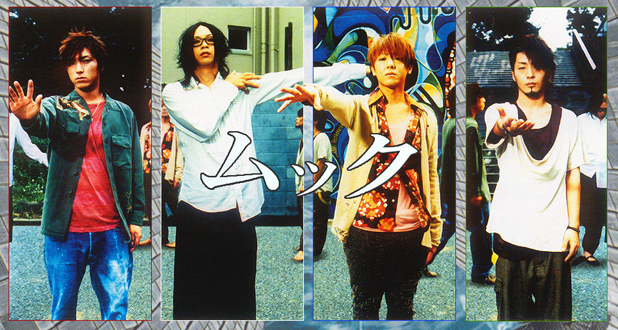
Musically most visual keibands fall under categories of goth rock or heavy metal, but subcategories abound. “There’s for instance angura kei, which is darker and not as particular about the visuals, and oshare kei, which is more cute and fluffy”, explains Annika Vellonen, also known as Matron, co-manager of JaME-Suomi web portal and an active member of the JrockSuomi association. “The categories mainly delineate a certain visual style, but it usually also reflects the music.Angura kei band MUCC, for instance, blends aggressive metal and punk rock.

MUCC

J-rock fandom is often closely associated with a general interest in Japanese youth culture, and within the variety of styles represented by J-rock groups any Japanophile can find hers. The fans are truly dedicated, and in fact the recent invasion is mostly orchestrated by an underground army of fans. “There were a lot of fans and demand for gigs in Finland, but nobody was doing anything about it, so we decided to do it ourselves”, says Annika. JrockSuomi took the initiative and brought the first visual kei band Blood for a gig to Turku in 2005 and collaborated with King Foo Entertainment to bring in other names like D’EspairsRay andMUCC.

Once proven popular, bigger promoters are joining the game. This summer’s Ankkarock is the first Finnish rock festival to get on the J-rock bandwagon by adding visual kei heroes Dir en grey to their line-up. Bands are also springing up in China and Korea, and recently a group in Greece proclaimed themselves the first European visual kei band. There’s plenty of potential there, and right now J-rock is hotter than lava.

And they say students hate them

The guy was
sharp on the phone and not very eager to do much, even when I gave him freedom
of speech (as we always do, having a magazine called FREE!… 2+2…). He gave me
some excuses saying that he has to be tomorrow in Estonia, and that he could not be
reached by phone, and obviously was not going to check the mail there. The way
he talked about Tallinn,
I could have thought that he was flying to Nepal or to Mars…  I happened to have lived in Estonia during
6 months last year…and I appreciate among other nice features of our beloved
Baltic neighbour the great access they have to wi-fi connections in every
corner of the city and every café.

I chose the
option of just sending a quick mail at 13:00
in the afternoon, was asking for a very general opinion about the theory I am
interested in reporting, and the guy had a perfectly clear idea that he was
going to receive an e-mail mail in the next hours. It is almost 01:00 at night. No answer.

I don’t know
if it is by chance, but in the short history of FREE! Magazine, it does not
happen to be the first bad encounter with university professors. When preparing
our first issues, we had negotiations with a famous academic from the History
department, about the possibility of having a monthly column in FREE! He agreed
once and again, promised to send the material, the deadline came closer and
closer…and we never had farther news from him.

Not exactly
that University teachers are in the “top 10 of beloved professions”, I would
say, quite the opposite. Obviously not still at same level that my personal “number
ones”, the transport tickets inspectors, famous for their “friendly attitude”
and “exquisite courtesy”… With these attitudes, professors are climbing fast
in the ranking as well.

I encourage
to the nice professors and people from academic world in Finland (they
really exist my friends, keep the faith) to participate and collaborate with
FREE! Help us to spread the knowledge not only inside the classrooms, but
everywhere else!

Year of the Pig

{mosimage}Here I am knocking at the door of sex in
the opening paragraph and even bringing pigs into the equation. I am confident
that there is an official name for people who are sexually aroused by pigs, but
we’ll stick with ‘pigverts’ for now. Swines, boars, hogs, pigs or whatever you
call them are helplessly connected with erotica and it was the human mind that
created intercourse euphemisms such as ‘making bacon’ and ‘to pork’, plus
twisting the meaning of, “Do you want to nibble my sausage?”

It goes on. Have you ever received that
email forward that lists unknown trivia, one of which includes the fact that a
pig has an orgasm that lasts for thirty minutes? Believe it or not, this
factoid is true; the pig has a developed ejaculation method that boggles the
mind and will change the way you look at Porky Pig forever, plus brings new
meaning to his catchphrase, “That’s all folks!” – I guess I’d be stuttering too
after thirty minutes!

My heart goes out to the unfortunate Kermit
the Frog…that poor, poor puppet. It is no wonder that Miss Piggy regularly
flies into violent rages when she has experienced a thirty-minute session in
her life and unreasonably expects the same performance from a frog. Kermit is
accustomed to tadpoles and pondlife, while Miss Piggy is demanding a marathon
romp in the mud. I am no psychologist but even I can see her violence stems
from sexual frustration, perhaps she should spend a night with Gonzo and get it
out of her system.

Did you also know that a pig doesn’t sweat?
This means that not only is he pumping away for half-an-hour, but he also won’t
need a shower or apologise for any embarrassing buttock sweat stains on the
bedding. It was ten years ago that scientists cloned Dolly the Sheep, but it
seems to me that they should be focusing upon DNA from pigs. Forget Viagra
pills and deodorant, an injection of pig hormones will put the pork back into
your sausage.

The more information I uncover about pigs,
the more I am beginning to think that insults, such as pig-headed, male pig,
eat like a pig, are bordering on compliments. Pigs are the third most
intelligent mammal, after man and dolphins, and are one of a few mammals to be
prone to sunburn, which explains why you rarely see them on package holidays to
the Mediterranean.

As I write this column on the unlikely
topic of pigs and mating, a number of clearer understandings have struck me,
such as the reason why Piglet is so nervous, what drove Napoleon’s tyranny in Animal Farm and why two of the Three
Little Pigs couldn’t be bothered to build strong houses. Anyway, I hope this
will be one of the stranger articles inspired by the Chinese New Year you will
read over the coming month and I also think it is a shame that China isn’t
hosting the Games this year because they could have renamed them the
Olym-pigs…ouch!

Finnish cinema reaches abroad

The
industry is suffering, however, as public funding has failed to follow the
production costs – not even the general inflation. Film production pays more
taxes than it gets in support, plus most of the budget is spent on human
labour. The audience wants the films, the process dynamically benefits the
society, but politicians have failed to react to this. I think it is a shame.

Lutheran
life attitude still affects Finnish politics. Art and cinema does not feel like
"work" or "real", even after the IT bubble popped it is
still relatively easy to fund things with words "mobile" or "digital"
in the business plan. I think it would be great national self-defence, a
patriotic act, to strengthen the story industry, even just for a fraction of
the cost of the, just as such important, support for technological development.

Films are
universal, eternal signs of our life and our time. Seeing films evokes
feelings, such as compassion, anger, anxiety, amusement and whatever else possible.
Feelings means being alive. Emotions can make people happy. Happiness is tax
money well spent! Therefore, making a film is a patriotic act.

Each film
producers, such as myself, looks abroad to solve a chicken and egg type of problem.
The budgets are becoming increasingly harder to secure, so we must find foreign
investors, buyers and audiences. However, how can we find those when our small
budgets make our films look old, slow and childish in comparision?

We must
spend more time making better films than whining about money.

Some great
victories have been achieved. Jade
Warrior
is an example of a film that will be at the disposal of hundreds of
millions of people. The new Rölli
animation has been sold to many countries a year before its official release. I
just sold an upcoming Aku Louhimies film to the most important arthouse cinema
broadcaster in Europe, ZDF-Arte. Perhaps there is light at the end of the
tunnel?

The
language of film is international, as is the craft of making films. Every
production company receives more and more job applications from non-native
Finns, although the odds for these applicants are not too good. They lack the
network of contacts built during years of filmwork and film schools. Making
English the production language can restrict some older members of the film
society from working on the projects. Still, these foreign people will bring
invaluable aspects and experiences with them to Finnish cinema.

Solving
their problem can be a part of solving the film export issue.
Keep applying and we will keep trying!

Art makes the world go around

The
American producer had bought a super yacht with the revenue he made with his
last film. “What about the rest of the money then?” Biotechnics shares was the answer. 

The Greek
producer had remained silent and the other two turned to him and asked what he
had bought with the revenue from his latest film? “A tape recorder”, he
replied. “And what about the rest of the money?”, the other two asked. 

”My mom
lent me the rest”, the proud Greek said. 

You could
replace Greece with Finland and there would be no difference. Filmmaking in a
country of five million is business wise nearly as absurd as agriculture in
these freezing and dark latitudes. But it is a well-known fact that once you
have food, shelter and health, money has little influence in happiness. Greed
is not the strongest motivator in life. (I was once close to starting a joint
film production company with an Icelandic colleague – it would’ve been called Lust, Envy & Greed Ltd). 

It is
incredibly rewarding to work on something that feels meaningful. This explains
why nurses, teachers, policemen and many others keep on working hard despite
minuscule pay. Feeling of something bigger also motivates film workers, who
joggle their lives between short but exhausting 50-hour weeks and months of
unemployment without hope. 

Crews
working on commercials get better paid than when working on film – even though
it is the same people doing the same kind of job. But the absence of something
bigger – a meaning, be it art, innovation or just ambitious entertainment –
must be financially compensated for. 

There is
not much glamour in actual film life. In Finland, actors do not have vans with
Jacuzzis. They take public transport to the shoot and eat cold food on
disposable paper plates during lunch breaks. Of course, they feel mistreated
and underpaid, which is also true. But there is a lot of truth in the English
language – the verb play refers to both a child’s playing, and acting. What a
luxurious job it is to get paid for having fun! 

Some people
think that people working in the creative business are privileged. It is very
true. But it also true of everybody who knows that their work makes the world
just a little bit better – or at least more bearable.